
Introduction
The Indian stock market offers multiple indices for traders and investors, but few are as dynamic and broadly traded as Bank Nifty. Whether you are an intraday trader, options buyer, futures trader, or long-term investor monitoring sector performance, understanding NIFTY Bank is essential.
In this complete guide 2026, we will cover everything in detail:
What Bank Nifty is
History and background
Companies included
How it is calculated
Trading Instruments(Futures & Options)
Strategy for beginners and advanced traders
Risk management
Expiry day trading
Long term investing perspective
Advantages and risks
FAQs
Let’s start from the basics and move step-by-step to advanced concepts.
What Is Bank Nifty?
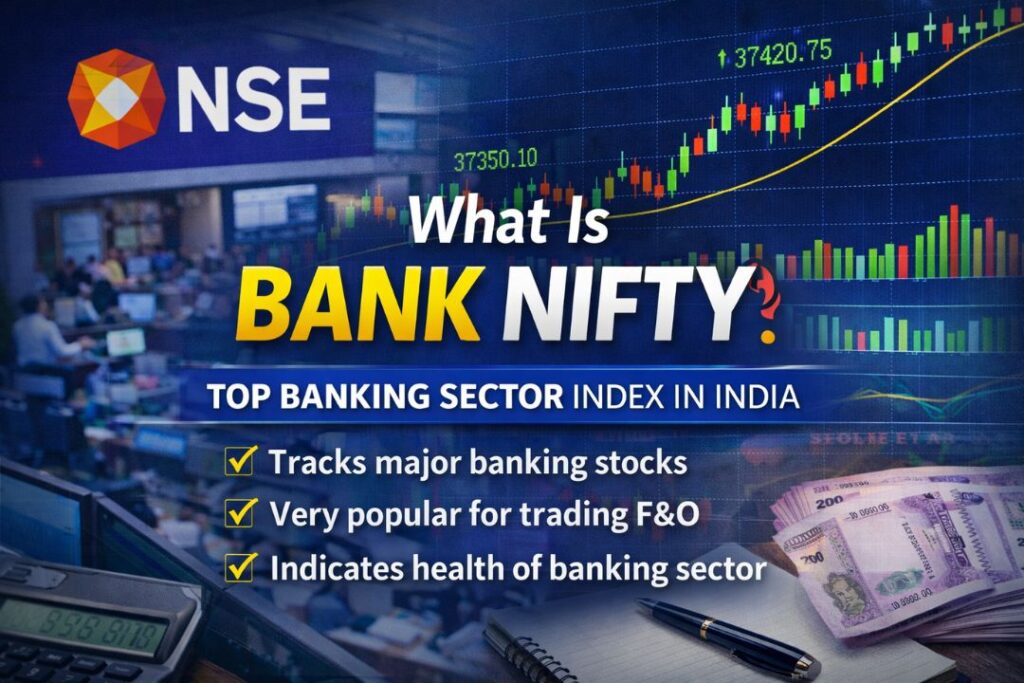
Bank Nifty, officially known as NIFTY Bank, is a disciplinary index that tracks the performance of the top banking companies listed on the National Stock Exchange of India (NSE).
This represents the overall movement of India’s banking sector.
Whenever major banking stocks rise,Banking sector index increases.
Whenever banking shares fall, Banking index of India falls.
It is one of the most unstable and actively traded indices in India.
NIFTY Bank History and Background
NIFTY Bank was launched by NSE to providing a benchmark for the banking sector. Over time, it became extremely popular among merchants due to:
High liquidity
Strong intraday movements
Weekly options expiry
Heavy involvement from institutions
Today, Bank Nifty index is one of the most traded derivative tools in India.
Companies included in NIFTY Bank
NIFTY Bank comprises of 12 major banking stocks from private and public sectors.
Some key components include:
- HDFC Bank
- ICICI Bank
- State Bank of India
- Axis Bank
- Kotak Mahindra Bank
- IndusInd Bank
These banks have different weighting based on market capitalisation. Large cap private banks usually dominate the index movement.
How is NIFTY Bank calculated?
NIFTY Bank is calculated using the Free-Flot Market Capitalization Method.
What Does That Mean?
- Only publicly available stocks are considered.
- Promoters holdings are excluded.
- Companies with higher market capitalisationhave higher weight.
If HDFC Bank moves strongly, Bank Nifty index will move significantly due to its heavy weight.
Why Bank Nifty Is Important
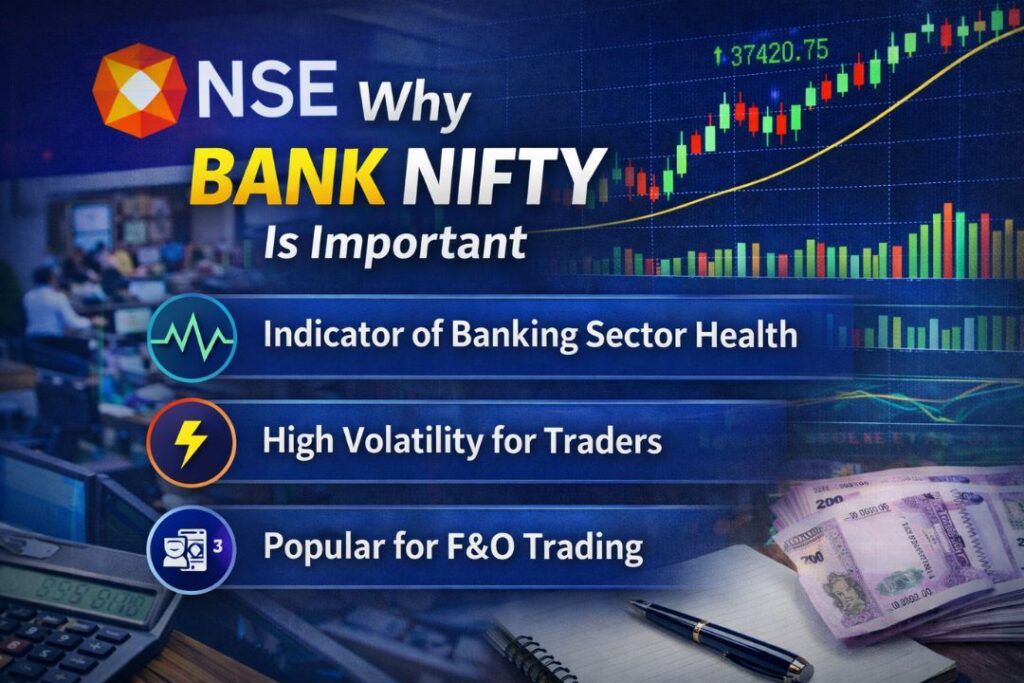
1.indicator of banking sector health
Banking is the spine of any economy. If banks perform well, credit growth increases and economical activity improves.
2.Popular for Derivatives Trading
NIFTY Bank futures and options are highly liquid, making them attractive for traders.
3.High Volatility = High Opportunities
NIFTY Bank moves 300–800 points in a single day frequent. This creates strong profitable opportunities.
Bank Nifty vs Nifty 50
| Feature | Bank Nifty | Nifty 50 |
|---|---|---|
| Sector Coverage | Banking Only | All Major Sectors |
| Stocks | 12 Banks | 50 Companies |
| Volatility | High | Moderate |
| Best For | Traders | Investors |
Trading Tools in NIFTY Bank
1.NIFTY Bank Futures
- Used for directional trading
- Requires margin
- Moves point to point with index
2.NIFTY Bank Options
Two types:
- Call Option (CE) – Buy when expecting the market to rise
- Put Option (PE) – Buy when expecting market to fall
Weekly expiry makes it very appealing.
What Moves Bank Nifty?
Many factors influence NIFTY Bank:
RBI Monetary Policy
Interest rate hikes or cuts directly influence banks.
Inflation Data
High inflation could lead to rate hikes.
GDP Growth
Stronger GDP enhances banking sector performance.
Global Markets
US markets and global banking news influence sentiment.
Quarterly Results
Earnings of major banks create big movements.
1: Open Range Breakout
- Mark first 15 minute high and low.
- Buy above high.
- Sell below low.
- Use strict stop-loss.
2: Support and Resistance
- Identify key levels.
- Trading near breakout or rejection
3: VWAP Strategy
- Buy above VWAP in uptrend.
- Sell below VWAP in downtrend.
Bank Nifty Expiry Day Trading
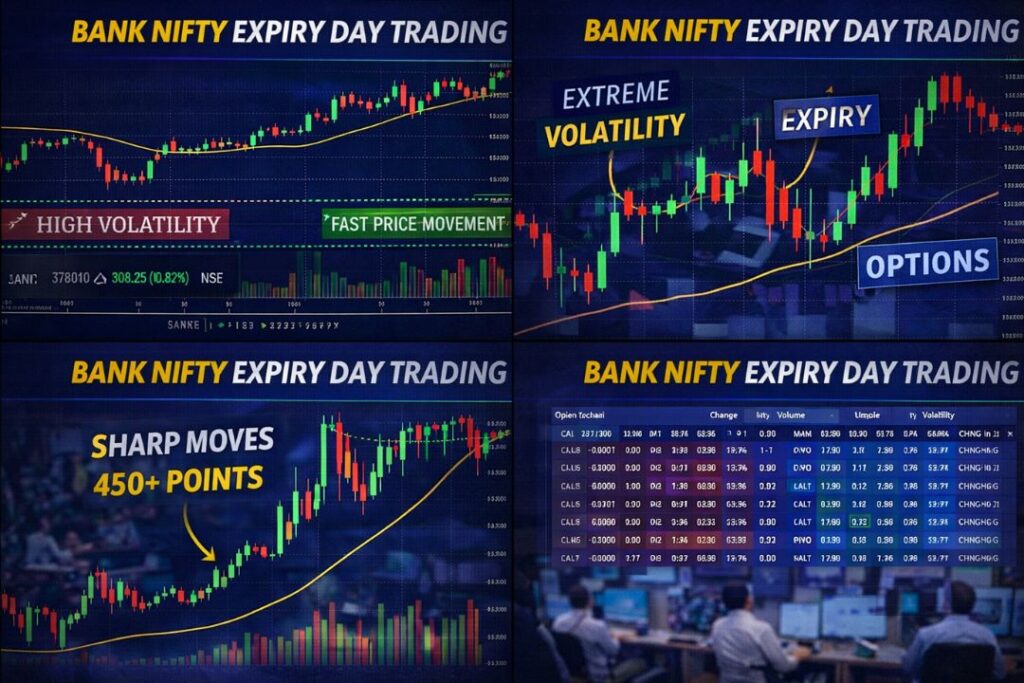
NIFTY Bank weekly expiry is very unstable.
Rules for Expiry Trading:
- Avoid overtrading
- Trade with the trend
- Book profits quickly
- Use small quantity if a beginner
Expiration day can give huge profits but also heavy losses.
Risk Management in Bank Nifty
Never ignore risk management.
Always use stop-loss
Risk only 1-2% of capital per trade
Avoid emotional trading
Do not revenge trade
Higher volatility means higher risk.
Is NIFTY Bank good for beginners?
It depends.
Beginners should:
- Start with a small quantity
- Learn price action
- Practice in demo account
- Understand option Greeks
Without knowledge, Bank Nifty can cause massive losses.
Long-term investing in NIFTY Bank
Rather than trading, investors can invest in:
- Bank Nifty ETFs
- Banking sector mutual funds
This provided exposure to India’s banking growth story.
Benefits of Trading NIFTY Bank
- High liquidity
- Tight spreads
- Large movements
- Weekly Expiry
- Institutional participation
Disadvantages of trading bank nifty
- Highly volatile
- Fast losses possible
- News-based sharp reversals
- Requires discipline
NIFTY Bank Lot Size (2026)
Lot size may vary as per NSE regulations. Traders must always check updated contract specs on NSE website.
Best Time to Trade Bank Nifty
- 9:15 AM – 11:00 AM (High volatility)
- 1:30 PM – 3:00 PM
Avoid midday choppi markets unless experienced.
Psychological Discipline
Successful NIFTY Bank trading depends on:
- Patience
- emotional control
- Consistency
- Risk control
Most traders fail because of lack of discipline, not strategy.
Common Mistakes Traders Make
- Overleveraging
- Trading without stop-loss
- Blind option buying
- Ignoring global cues
- Trading without a plan
Avoid these to survive longer term.
FAQs
Q1:Is Bank Nifty better than Nifty 50?
For trading- Yes (more volatility).
For investment – Nifty 50 is safer.
Q2: Can beginners trade Nifty?
Yes but start small and learn first.
Q3: Why is NIFTY Bank so unstable?
Because banking stocks respond strongly to economic news and interest rates.
Q4: Is buying options profitable?
It can happen, but requires proper timing and risk management.
Conclusion
Bank Nifty is one of the most powerful and actively traded indicators in the Indian stock market. It reflects the strength of India’s banking sector and offers enormous opportunities for traders.
However, with higher reward comes higher risk.
If you want to succeed in NIFTY Bank trading
- Learn technical analysis
- Practice risk management
- Control emotions
- Stay disciplined
NIFTY Bank can create wealth for skilled traders — but it can also destroy capital for careless ones.
Disclaimer
This material is for educational purposes only and does not constitute financial or investment advice. Trading NIFTY Bank and other stock market instruments involves higher risk, and you may lose capital.
Please consult a qualified financial advisor before making any investing decisions. Invest only the sum you can afford to lose.
