
Introduction
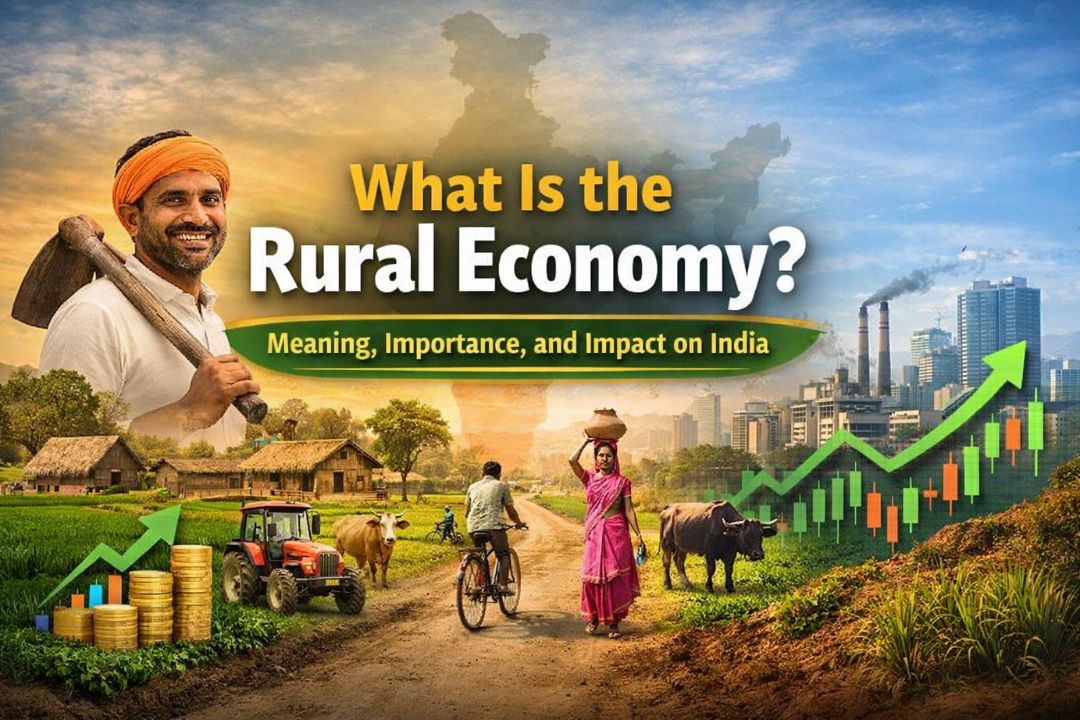
The rural economy plays a vital role in shaping India’s overall economic growth. A large portion of India’s population still lives in villages, and their livelihood relies on agriculture and related activities. When the rural economy grows, it directly strengths demand, consumption, employment, and national income.
In this blog, we will understand what the rural economy is, its main components, significance, challenges, and how it impacts the Indian economy and stock market.
What is the Rural Economy?
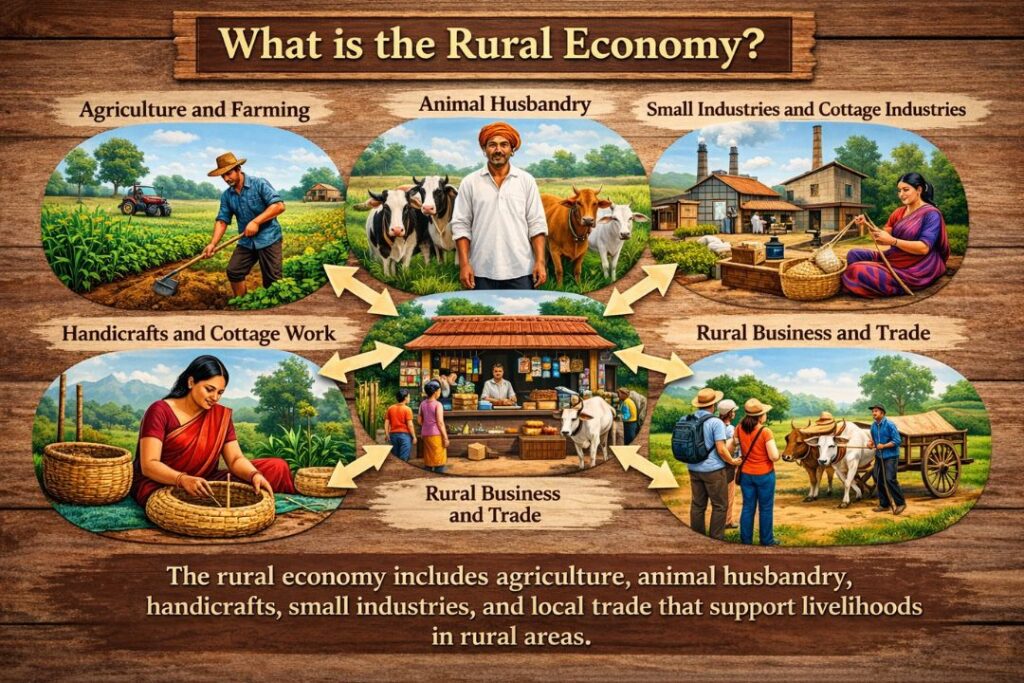
The rural economy refers to all economical activities that take place in villages and rural areas. These activities mainly include agriculture, animal husbandry, rural industries, daily wage labor, and government-supported employment schemes.
In simple terms, the rural economy is the backbone of India’s economic system because it supports food production, raw materials, employment, and consumer demand.
Key Components of Rural Economy
1.Agriculture
Agriculture is the main pillar of the rural economy.
It includes:
- Crop farming (rice, wheat, cotton, pulses, vegetables)
- Irrigation-based farming
- Seasonal farming depends on monsoon.
A good monsoon season usually leads to higher rural income and stronger economical growth.
2.Animal Husbandry
Animal farming is an important secondary income source for rural households.
It includes:
- Dairy farming(milk,curd,ghee)
- Poultry farming
- Goat and sheep rearing
This sector provides regular income even when crop output is weak.
3.Rural and cottage industries
Rural industries help reduce reliance on farming alone. Examples include:
- Handicrafts
- Khadi and handloom
- Pottery
- Small scale food processing units
These industries generate local employment and preserve conventional skills.
4.Wage labor and employment schemes
Many rural households depend on:
- Farm labor
- construction work
- government employment programs like rural job schemes
These activities provide income sustainability during non-farming seasons.
Importance of rural economy
1.Supports a large population
A significant percent of India’s population lives in rural areas.
The rural economy ensures employment, income and food security for millions of people.
2.Drives Consumer Demand
When rural income rises:
- Demand for FMCG products grows
- Sales of tractors, two-wheelers, cement, fertilizers and seeds grow.
This boosting manufacturing and service sectors as well.
3.Strengths the National Economy
A stronger rural economy leads to:
- Higher consumption
- Better savings
- Increased tax collection
All of this contributes to overall economic stability.
rural economy and the stock market
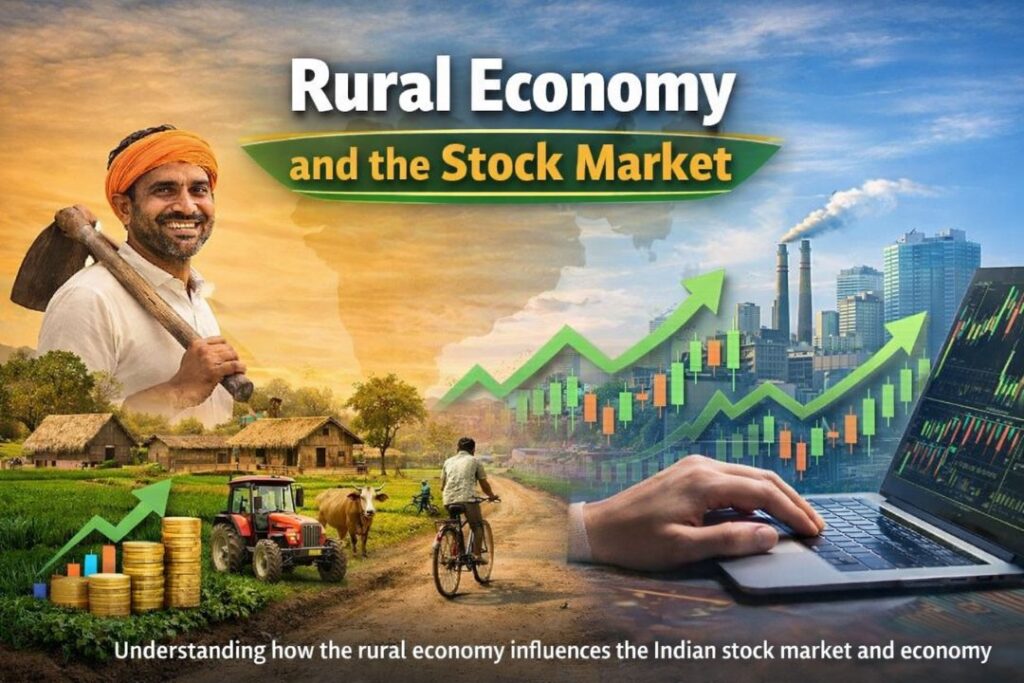
The rural economy has a direct and indirect influence on the stock market.
When the Rural Economy is Strong:
- FMCG companies reported higher sales
- Tractor and agro-based stocks performed well
- Banking and NBFC stocks gain due to better loan reimbursements
When the rural economy is weak:
- Demand for consumer goods drops
- Rural focused companies see profit pressure.
- Overall market sentiment becomes cautionary
This is why investors closely monitor monsoon data, MSP announcements, and rural spending.
Factors that improve rural economy
Several factors help strengthen rural development:
- Good monsoon and sufficient rainfall
- Highest Minimum Support Price (MSP)
- Government subsidy and farm loan support
- better rural infrastructure
- Access to banking and digital payment
Challenges faced by the rural economy.
Despite its significance, the rural economy faces many challenges:
- Dependence on monsoon rain
- Low adoption of modern technologies
- Limited access to quality education and healthcare.
- Agricultural products price volatility
- Increasing input costs for farmers
Addressing these challenges is essential for sustainable development.
Additional Insights on Rural Economy
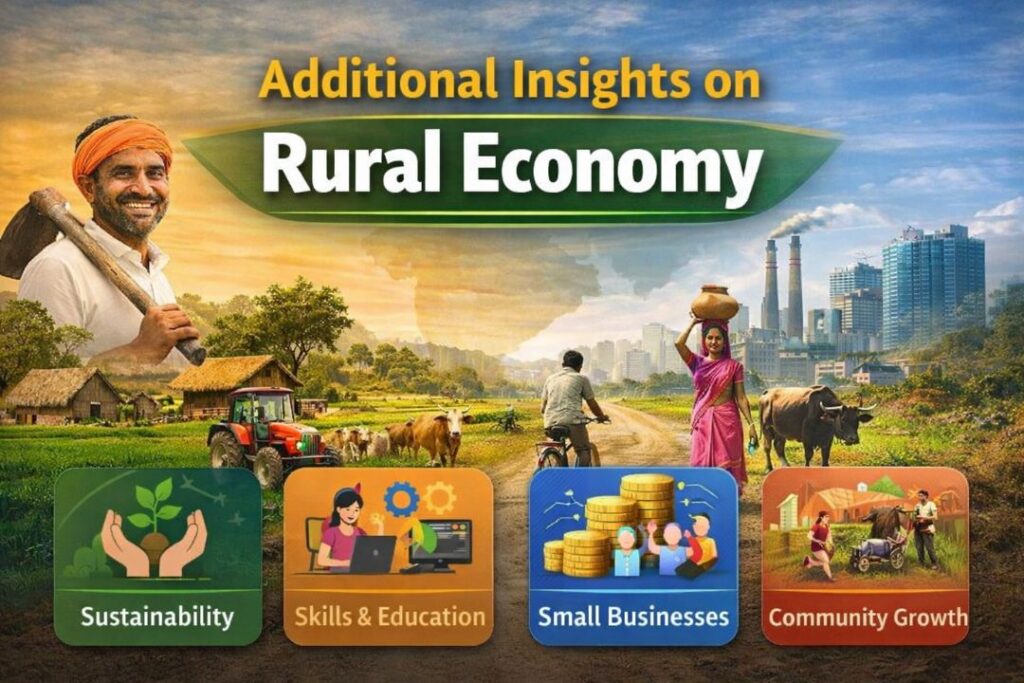
The rural economy is not only important for food production but also for maintenance social and economic balance in a country like India. Rural areas supply raw materials to industries such as textiles, food processing, sugar, and dairy, which helps industries operate smooth. Without a strong rural base, industrial development becomes unstable.
In recent years, technology and digital connectivity have begun transforming the rural economy. Mobile banking, UPI payments, online marketplaces, and agro-tech platforms have improved access to markets and financial services for farmers. This has reduced reliance on middlemen and helped farmers get better prices for their produce.
Migration When rural job opportunities are limited, people migrate to cities in pursuit of work. A stronger rural economy can reduce this migration by creating local employment, improving living standards, and supporting sustainable growth.
Climate change is also becoming a major factor affecting the rural economy. Irregular precipitation, droughts, and floods affect agricultural output and rural income. Hence, investment in irrigation, crop insurance, and climate-resilient farming practices is essential.
Overall, strengthening the rural economy leads to inclusive growth, where both rural and urban areas grow together, creating a more stable and resilient national economy.
Community and Growth in Villages
Villages play a vital role in maintaining social equilibrium and cultural values. Everyday life is often built around cooperation, shared resources, and local traditions. Economic activities are closely connected with community involvement, which helps people support each other during difficult times. This collective approach builds resilience, even when income levels fluctuate.
Access to quality education and healthcare can significantly transform living conditions. When schools and medical facilities are available nearby, families save time and money, allowing them to concentrate more on productive activities. Skill-based training programs also help people explore new work opportunities beyond traditional professions.
Small enterprises and self-help groups contribute to financial freedom, especially for women. Activities such as food processing, tailoring, handicrafts, and local services create steady income and promote entrepreneurship. These efforts strengthen households and improve trust within the community.
Environmental consciousness is equally important for long-term progress. Responsible use of land, water, and natural resources ensures sustainability for future generations. Sustainable practices not only protect nature but also support sustainable livelihoods. Balanced development that respects people, community, and the environment leads to lasting and inclusive development.
Government role in rural development
Government initiatives play a major role in improving rural situations:
- Investment in irrigation and infrastructure.
- Support for farmers via subsidies and insurance
- Promotion of Rural Entrepreneurship
- Expanding digital and financial inclusion
Such measures help increase income sustainability and productivity.
Future of rural economy in India
The future of the rural economy relies on:
- Technological Adoption in Agriculture
- Diversity of income sources
- Better access to markets for farmers
- Skills development and education
With the right policies and investment, the rural economy can become a major growth engine for India.
Conclusion
The rural economy is the spine of India’s economic system. It supports agriculture, employment, consumption, and national development. A strong rural economy not only improves the lives of millions of people but also boosts industries, markets, and overall economic sustainability.
Understanding the rural economy helps investors, policymakers, and citizens make better decisions for long-term development.
FAQs
Q1. What is rural economy in simple terms?
The rural economy refers to all income-generated activities in villages, mainly agriculture, animal husbandry, and small industries.
Q2. Why the rural economy is important for India
Because a large population relies on it for livelihood, and it drives consumption and economic growth.
Q3. How does the rural economy influence the stock market?
Strong rural income increases demand for goods, increasing company profits and market performance.
Q4. What are the major income sources of the rural economy?
Agriculture, animal household, dairy farming, small rural industries, daily wage work, and government employment schemes are the main income sources.
Q5. How does a strong rural economy help the general economy?
Higher rural income increases demand for goods and services, which boosts business growth, employment, and national economic sustainability.
Disclaimer : The information provided in this blog is for educational and informational purposes only. It should not be considered as professional, financial, or legal advice.
Stay connected for more such information https://stockhubnews.com
