
Introduction : Why Crude Oil Prices Matter So Much
Crude oil is frequently called the lifeblood of the global economy. Almost every product or service we use transportation, electricity, food, manufacturing, plastics, chemicals relies directly or indirectly on oil. Because of this, even a small change in crude oil prices can create a massive ripple effect throughout economies.
For a country like India, which imports more than 80% of its crude oil requirements, oil prices play a critical role in economic stability. Rising crude oil prices increase inflation, weaken the currency, widen the fiscal deficit, and negatively influence the stock market. On the other hand, falling oil prices lower costs, boost growth, and support consumer spending.
This article provides a complete, deep analysis of the impact of crude oil prices on the Indian economy, inflation, stock market, currency, government finances, industries, and common citizens, with a long-term perspective towards 2026 and beyond.
What is crude oil?
crude oil It is purified into products such as:
- Petrol
- Diesel
- Aviation fuel
- LPG
- Kerosene
- Petrochemicals
These products are necessary for:
- Transportation
- power generation
- Manufacturing
- Agriculture
- Logistics
Because crude oil is traded globally, its price is impacted by international demand, supply, geopolitics, and currency movements.
How Crude Oil Prices Are Decided
Crude oil prices are not controlled by any single nation. These are shaped by global factors:
Demand and Supply
- Higher global demand-higher prices
- Excess supply – lower prices
Economic growth, industrial activity, and travel demand strongly impact oil consumption.
Role of OPEC
OPEC (Organisation of the Petroleum Exporting Countries) plays a major role by:
- Controlling Oil Production Levels
- Influencing global supply
- Stabilization or increasing oil prices
Any production cut or hike announced by OPEC directly influences global oil prices.
Geopolitical Tensions
Events such as:
- Wars
- Sanctions
- Middle East conflicts
- Shipping route disruptions
Can cause sudden spikes in oil prices due to supply uncertainty.
US Dollar Strength
Crude Oil is priced in US dollars.
- Strong dollar -oil becomes costly for importing countries
- Weak dollar-oil becomes cheaper
India’s dependence on crude oil imports
India is one of the world’s largest crude oil exporters.
Key Facts:
- India imports more than 80% of its oil requirements
- Oil imports form a major portion of the trade deficit.
- Any price increase directly affects the economy.
This high reliance makes India vulnerable to global oil price shocks.
Effect of Crude Oil Prices on the Indian Economy
Economic Growth
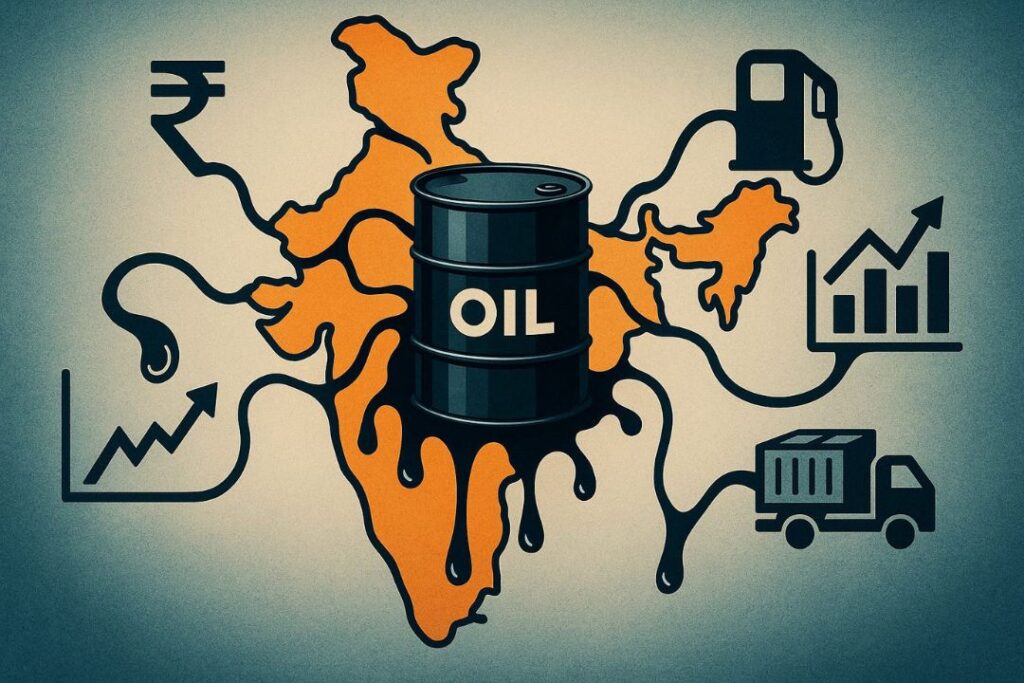
High crude oil prices:
- Increased production costs
- Reduce corporate profits
- Lower consumer spending
- Slow down economic growth
Low crude oil prices:
- Reduce costs for businesses
- Improve margins
- Boost consumption
- Support GDP growth
Inflation Impact
Crude oil is a main driver of inflation.
Rising oil prices increase:
- Petrol and diesel prices
- Transportation costs
- Food prices
- Manufacturing expenses
This leads to cost-push inflation, affecting all segments of society.
Crude Oil Price Effect on Inflation (CPI & WPI)
Consumer Price Index (CPI)
Fuel prices directly influence household expenses. Rising petroleum and LPG prices increase monthly budgets, pushing CPI higher.
Wholesale Price Index (WPI)
Industries utilize oil as an input. Higher oil prices raise wholesale prices, which ultimately pass on to consumers.
Effect on Government Finances and Fiscal Deficit
High crude oil prices impact government finances in multiple ways:
- Increased subsidy burden
- Higher import bill
- Pressure on fiscal deficit
- Decreased ability to increase capital expenditure
The government frequently reduces excise duty to control fuel prices, which lowers tax revenue.
Impact on the Indian Rupee
Rising crude oil prices increased demand for US dollars to pay for imports.
This leads to:
- Rupee depreciation
- Higher import costs
- Imported inflation
A weakened rupee further increases oil prices in domestic terms, creating a vicious cycle.
Impact on India’s Trade Deficit and Current Account Deficit.
Crude oil imports form a major portion of India’s trade deficit.
- Higher oil prices-wider trade deficit
- Wider deficit-pressure on currency
- Higher CAD – macroeconomic instability
Sustained higher oil prices can weaken India’s external balance.
Impact on the Stock Market

Negative impact of rising oil prices
High crude oil prices negatively affected:
- Aviation companies
- Logistics firms
- Paint and chemical companies
- FMCG margins
Higher costs reduce profits, leading to stock price pressure.
Sectors that benefit from high oil prices
Some sectors benefit:
- Oil exploration companies
- Oil marketing companies
- Energy service providers
However, the overall market sentiment usually turns negative when oil prices increase sharply.
Impact on sector-wise performance
Aviation
Fuel accounts for a large cost. Higher oil prices reduce airline profits.
FMCG
Higher transportation costs influence margins and product pricing.
Automobile
Rising fuel prices reduce vehicle demand, particularly in two-wheelers and passenger cars.
Infrastructure
Higher input costs increase project expenses and decrease returns.
Impact on Common People
Rising crude oil prices directly affect everyday life:
- Higher prices of petrol and diesel
- Increased food prices
- Higher electricity bills
- Increased transport fares
Middle-class and low-income families feel the maximum pressure.
Crude Oil and Monetary Policy
Higher inflation caused by oil prices forces central banks like Reserve Bank of India to:
- Increase interest rates
- Tighten liquidity
- Control demand
Higher interest rates slower economic growth and increase loan EMIs.
Impact on Government Policies
To handle oil price shocks, the government may:
- Reduce fuel taxes
- Increase subsidies
- Release of strategic oil reserves
- Promote alternative energy
Each option has fiscal and economic implications.
Global Crude Oil Price Trends
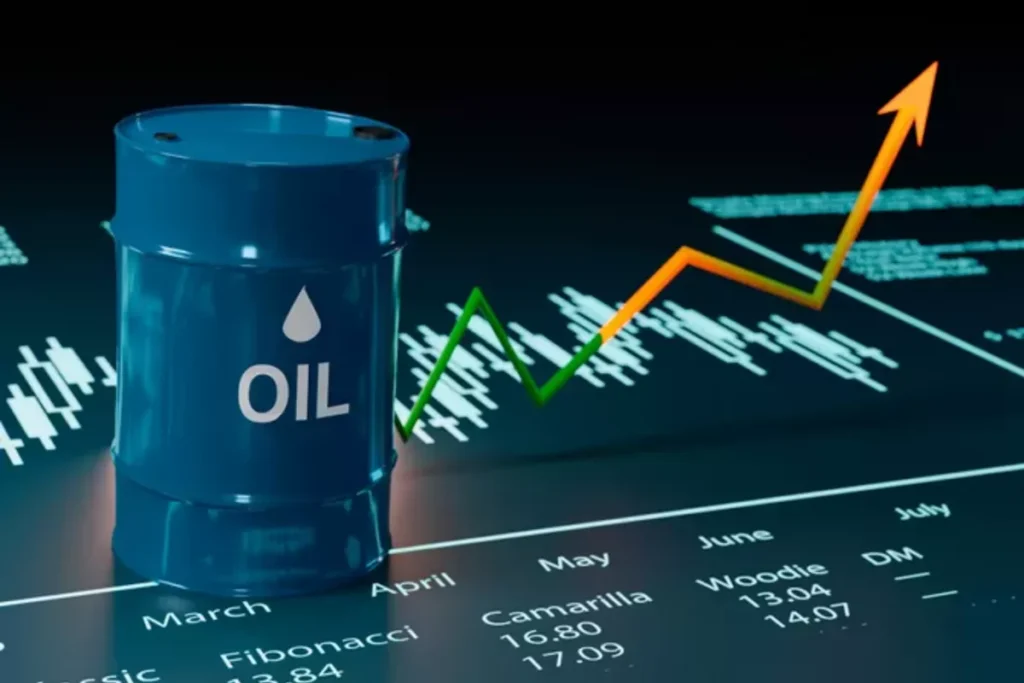
Historically, oil prices have been unstable due to:
- Global recessions
- Pandemics
- Wars
- Supply chain disruptions
India must constantly adapt its economic policies to manage this volatility.
Role of Renewable Energy in Reducing Oil Dependence.
India is investing heavily in :
- Solar energy
- Wind energy
- Electric vehicles
- Biofuels
Reducing oil reliance improves energy security and economic stability.
Crude Oil versus Renewable Energy Transition
Long-term global trends suggest:
- Gradual reduction in fossil fuel dependency.
- Growth of green energy
- Electrification of transport
Nevertheless, crude oil will remain important for decades.
Future Outlook of Crude Oil Prices(2026–2035)
Factors affecting future oil prices:
- Global economic growth
- EV adoption
- Geopolitical stability
- Climate policies
Oil prices are expected to remain volatile but structurally significant.
How India Can Decrease Crude Oil Price Impact
Key strategies include:
- Diversifying oil imports
- Increasing Domestic Production
- Expanding Strategic Oil Reserves
- Promoting electric mobility
- Improving fuel efficiency
Long-term structural impact on India
Crude oil prices influence:
- Economic planning
- Fiscal policy
- Industrial strategy
- Foreign relations
Energy security is a key pillar of India’s long term growth story.
Conclusion:Why Crude Oil PricesWill Always Matter
Crude oil prices are one of the most powerful outside factors affecting the Indian economy. From inflation and fiscal deficit to stock markets and family budgets, oil prices touch every aspect of life.
For India, managing crude oil price instability is not optional it is essential for sustainable economic growth. While renewable energy provides hope for the future, crude oil will continue to shape economic outcomes for years to come.
FAQs
Q1. Why does high crude oil prices hurt the Indian economy?
Because India imports most of its oil, higher prices increase inflation, weaken the currency, and raise the fiscal deficit.
Q2. Which sectors are most influenced by crude oil price changes?
Aviation, FMCG, automobiles, logistics, and infrastructure are most sensitive to oil price moves.
Q3. How do crude oil prices influence fuel prices in India?
Crude oil prices directly impact petrol and diesel prices, as India imports most of its oil from global markets.
Q4. Does a drop in crude oil prices benefit India?
Yes, lower crude oil prices reduce inflation, improve government finances, strengthen the Rupee, and support economic growth.
Q5. How do crude oil prices influence the stock market?
Rising oil prices usually hurt market sentiment by increasing costs, while declining prices support corporate profits and stock market growth.
Disclaimer : This article is for educational and informational purposes only and should not be considered financial or investing advice.
Stay connected for more such information https://stockhubnews.com
