
Infrastructure development in india is one of the most important factors behind the growth of any country. In India, it plays a major role in improving economic performance, boosting industries, and making everyday life easier for people.
When I first started understanding infrastructure, I realized that it is not just about big projects like highways or airports. It directly affects our daily lives from the roads we travel on to the internet we use every day. In simple words, strong infrastructure makes everything faster, smoother, and more efficient.
🔑 Key Points
- Infrastructure development is essential for India’s economic growth.
- It includes roads, railways, airports, energy, and digital systems.
- Strong infrastructure improves connectivity and business efficiency.
- Government initiatives like Smart Cities and Bharatmala boost development.
- Challenges include funding issues, land acquisition, and project delays.
- Private sector participation helps in faster and better execution.
- Technology is improving infrastructure through AI and automation.
- Both rural and urban infrastructure are important for balanced growth.
- The future of infrastructure in India looks promising with strong investment.
- This sector also offers long-term investment opportunities.
What is Infrastructure Development?
Infrastructure development means building and improving the basic systems that help a country run smoothly. These include roads, railways, electricity, internet, and even public services like healthcare and education.
There are mainly two types of infrastructure:
Physical Infrastructure
This includes things we can see and use physically:
- Roads and highways
- Railways and metro systems
- Airports and ports
- Power supply systems
Social Infrastructure
This focuses on improving people’s lives:
- Hospitals and healthcare
- Schools and education
- Housing and sanitation
Both are equally important. Without proper infrastructure, even a strong economy cannot function efficiently.
Importance of Infrastructure Development in India
1. Drives Economic Growth
Good infrastructure helps businesses operate smoothly. For example, better roads reduce transportation time, which saves costs and increases productivity.
2. Creates Job Opportunities
Large projects like highways, railways, and metro construction create jobs for millions of people. This improves income levels and supports the economy.
3. Improves Connectivity
Have you ever noticed how new highways reduce travel time? Better connectivity helps people travel easily and also improves trade between cities.
4. Attracts Investment
Investors always prefer countries with strong infrastructure. Better facilities mean better business opportunities.
5. Improves Quality of Life
Access to clean water, electricity, transportation, and internet improves daily life. This is something we all experience directly.
Key Sectors of Infrastructure in India
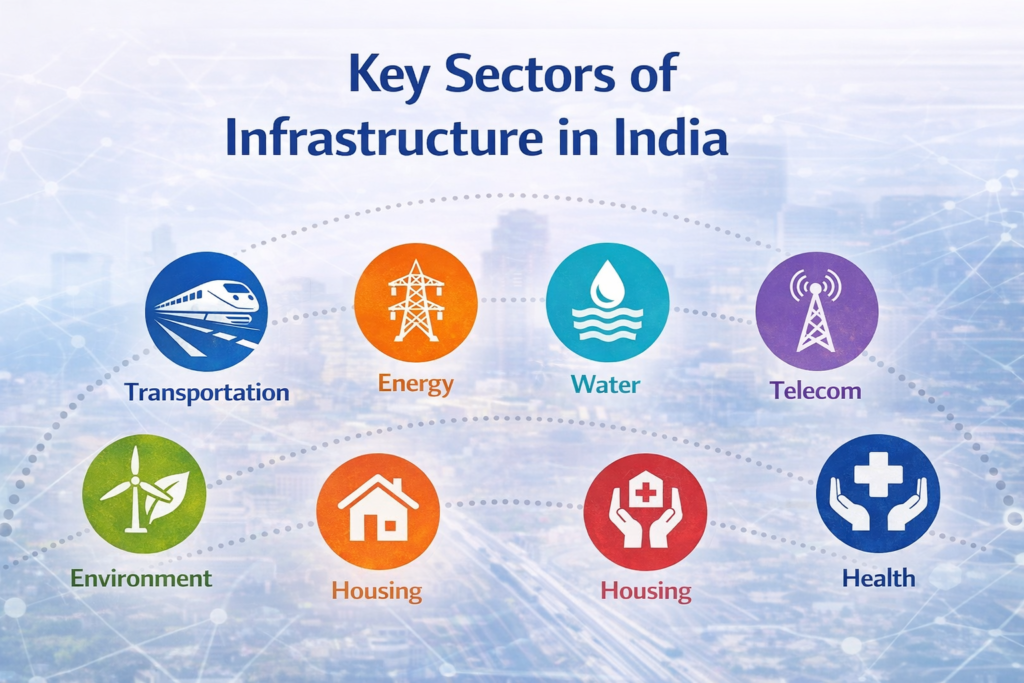
Road Infrastructure
India has a huge road network, and it is growing rapidly. Projects like expressways have made travel faster and more comfortable.
From my observation, new highways have significantly reduced travel time between cities, which also helps businesses grow faster.
Railway Infrastructure
Indian Railways is improving with modernization, electrification, and faster trains. This makes travel safer and more efficient.
Airport Infrastructure
Air travel in India is becoming more accessible. Even smaller cities are now connected through airports, which was not common earlier.
Energy Infrastructure
Electricity is the backbone of development. India is now focusing more on renewable energy like solar and wind power.
Digital Infrastructure
The growth of internet services and digital payments shows how fast India is becoming a digital economy.
Just think about it today almost everything, from payments to shopping, happens online.
Government Initiatives for Infrastructure Development
The government has taken many steps to improve infrastructure in India:
- National Infrastructure Pipeline (NIP)
- Smart Cities Mission
- Bharatmala Project
- Sagarmala Project
- Digital India Initiative
- Make in India Program
These initiatives aim to improve connectivity, urban living, and industrial growth.
Challenges in Infrastructure Development
Even though India is growing fast, there are still some challenges.
1. Funding Issues
Infrastructure projects require huge investments, which can be difficult to manage.
2. Land Acquisition
Many projects get delayed because of land-related issues. This is one of the biggest challenges.
3. Project Delays
In my opinion, delays in project execution are a major problem in India. They increase costs and reduce efficiency.
4. Environmental Concerns
Development should not harm the environment. Balancing both is very important.
5. Skilled Workforce
There is still a need for more skilled professionals in construction and engineering sectors.
Role of Private Sector
The private sector also plays an important role through partnerships with the government.
These partnerships help:
- Complete projects faster
- Bring new technology
- Reduce financial burden on the government
Without private sector support, large-scale development would be difficult.
Technology in Infrastructure
Technology is changing how infrastructure is built and managed.
- Smart traffic systems
- Digital toll collection
- AI-based planning
- Automation in construction
Now, let’s be honest—technology is making everything faster and smarter.
Rural vs Urban Infrastructure
Infrastructure development is not just about big cities.
Rural Areas
- Better roads
- Electricity supply
- Internet connectivity
These improvements help farmers, students, and small businesses.
Urban Areas
Cities are becoming smarter with:
- Metro systems
- Smart traffic
- Better waste management
This improves overall city life.
Future of Infrastructure in India
India’s future looks strong in terms of infrastructure.
- More government investment
- Growth of private sector
- Focus on green energy
- Use of advanced technology
In my view, infrastructure will be one of the biggest growth drivers for India in the coming years.
Investment Opportunities
Infrastructure development also creates opportunities for investors.
- Construction companies
- Cement and steel industries
- Renewable energy companies
- Real estate sector
If you think long term, this sector has strong potential.
Common Mistakes to Avoid
- Investing without research
- Following market hype
- Ignoring fundamentals
- Not diversifying
Always think long term instead of short-term gains.
Infrastructure Development in India
Infrastructure development plays a crucial role in shaping the economic growth and overall progress of a country like India. Over the years, India has made significant improvements in building roads, railways, airports, ports, and digital networks. These developments not only support businesses but also improve the quality of life for citizens.
One of the most important aspects of infrastructure is transportation. A strong transportation system ensures smooth movement of goods and people across the country. Projects like highways, metro systems, and railway modernization have helped reduce travel time and increase efficiency. Better connectivity between rural and urban areas also opens up new opportunities for trade and employment.
Another key sector is energy. Reliable electricity is essential for industries, households, and technological growth. India has been focusing on increasing its power generation capacity, including renewable energy sources like solar and wind. This not only helps meet rising demand but also supports sustainable development.
Water supply and sanitation are also critical parts of infrastructure. Clean drinking water and proper waste management systems are necessary for maintaining public health. Government initiatives have improved access to these basic facilities in many regions, especially in rural areas.
The role of the private sector in infrastructure development has become increasingly important. Public-private partnerships (PPPs) allow the government and private companies to work together on large-scale projects. This helps in bringing investment, innovation, and efficiency into the sector.
Despite the progress, India still faces several challenges. Issues like funding gaps, land acquisition delays, and environmental concerns can slow down development projects. Addressing these challenges requires strong planning, policy support, and effective implementation.
Looking ahead, the future of infrastructure in India appears promising. With the adoption of smart technologies, digital infrastructure, and sustainable practices, the country is moving towards modern and efficient systems. Continued investment and innovation will play a key role in achieving long-term growth.
In conclusion, infrastructure development is the backbone of India’s economic progress. By improving connectivity, energy supply, and basic services, it creates a strong foundation for development and a better future for all citizens.
Conclusion
Infrastructure development is not just about buildings and roads—it is about improving lives and supporting economic growth.
From my perspective, India is moving in the right direction, but consistent execution and planning are important. With the right approach, infrastructure can transform the country and create huge opportunities for both businesses and investors.
FAQs
What is infrastructure development?
It means building and improving basic facilities like roads, railways, and energy systems.
Why is it important in India?
Because it supports economic growth and improves living standards.
Which sectors are included?
Transport, energy, digital infrastructure, and urban development.
What challenges does infrastructure development face in India?
Major challenges include funding issues, land acquisition delays, and environmental concerns.
How does the private sector contribute to infrastructure in India?
The private sector contributes through investment, technology, and public-private partnerships (PPPs), helping improve efficiency and speed of development.
Disclaimer : This article is for informational purposes only and should not be considered financial advice. Always do your own research before making investment decisions.
