
Introduction
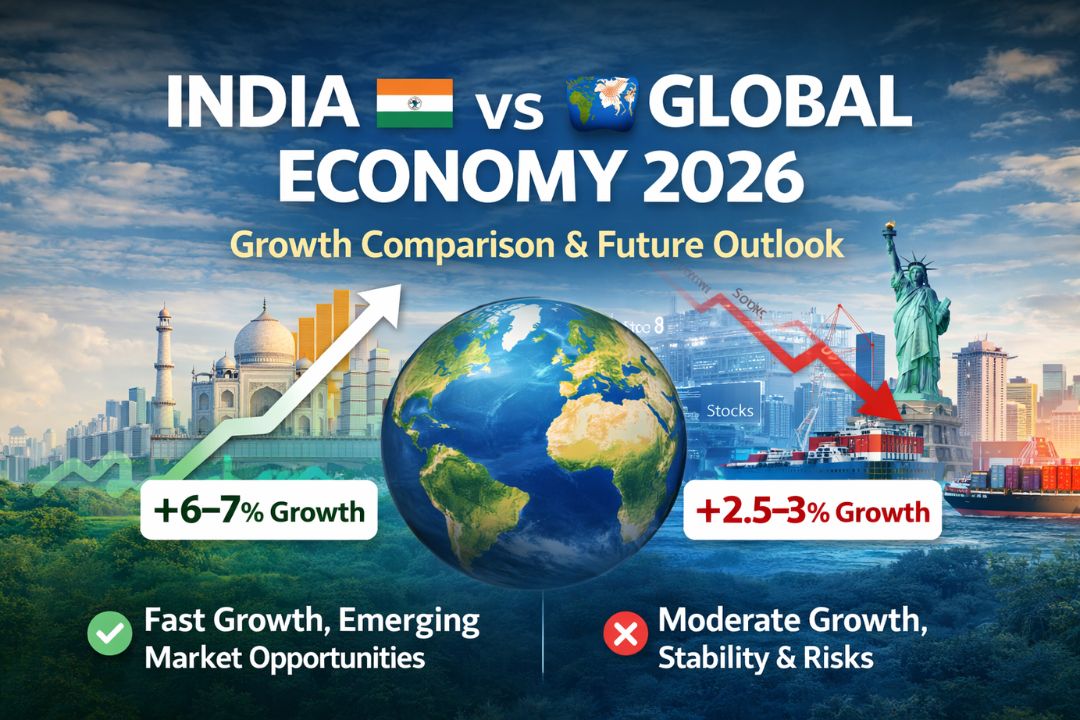
The global economic landscape is changing rapid as we move deeper into 2026. Investors, policymakers, and businesses are closely watching growth trends, inflation data, and geopolitical developments. One of the most discussed topics today is India vs Global Economy 2026 and how India compares with the broader world economy in terms of growth, sustainability, and opportunity.
In this detailed analysis, we will examine GDP predictions, sector performance, inflation trends, and investment outlook to understand the real picture behind India vs Global Economy 2026.
Global Economic Outlook 2026
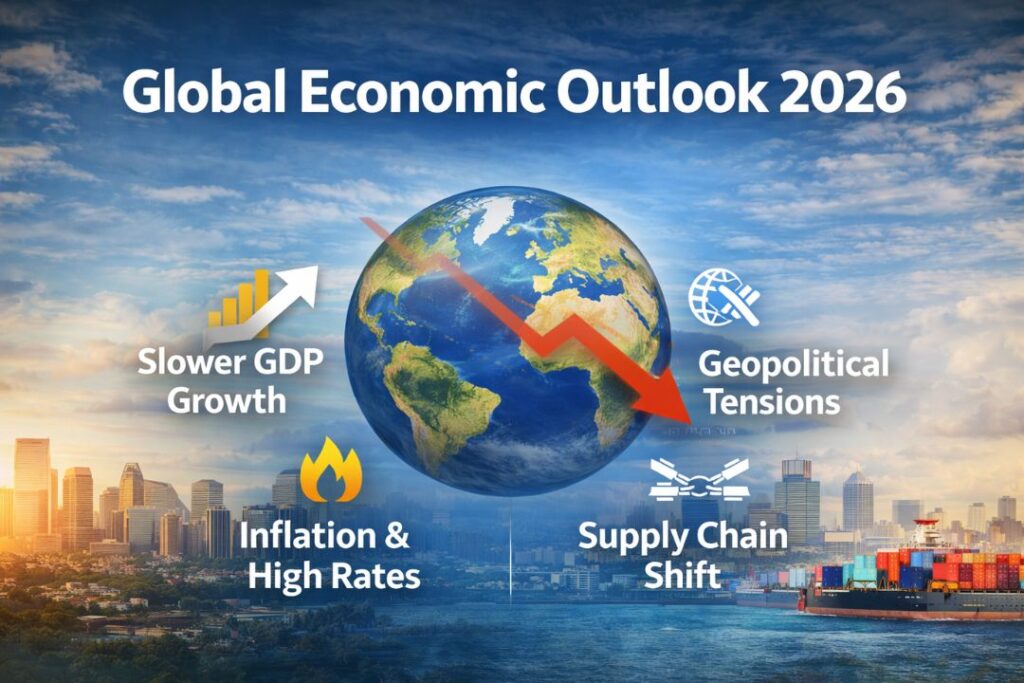
The global economy is expected to experience moderate but uneven growth in 2026. Developed nations like the United States and parts of Europe may face slower expansion due to higher interest rates and inflation control measures.
Key Global Trends:
- Lower GDP growth in developed economies
- Inflation stabilization but still above long-term targets
- Ongoing geopolitical tensions
- Supply chain restructuring
- Increase in green energy and AI-driven industries
While some emerging markets may outperform, the broader India versus Global Economy 2026 comparison shows that global growth may remain around 2.5%–3%, which is below pre-pandemic averages.
Debt levels remain a worry worldwide. Many countries are dealing with fiscal deficits, and central banks are careful about aggressive stimulus measures.
India’s economic growth in 2026
When analyzing India vs Global Economy 2026, India stands out as one of the fastest-growing major economies.
India’s projected GDP growth for 2026 is estimated between 6%-7%, significantly higher than the global average. Several factors supported India’s growth momentum:
Key drivers of India’s growth:
- Strong domestic consumption
- Rapid digital transformation
- Expanding startup ecosystem
- Infrastructure investment
- Manufacturing push under Make in India
India’s young population and expanding middle class create sustainable demand across sectors such as real estate, banking, technology, and consumer goods.
In the broader India versus Global Economy 2026 comparison, India’s demographic advantage gives it a structural growth edge.
Inflation Comparison: India versus Global Economy 2026
Inflation is one of the most important macroeconomic indices.
Globally, inflation has been slowly cooling after post-pandemic spikes. However, energy prices and geopolitical uncertainties still create instability.
In India, inflation is comparatively controlled compared to many developed economies. The Reserve Bank of India has maintained a balanced financial policy approach.
In the context of India versus Global Economy 2026, India appears more stable in managing price pressures, especially when compared to certain Western economies facing persistent cost-of-living challenges.
Investment Opportunities
Investment trends are another major factor in assessing India vs Global Economy 2026.
Global Investment Themes:
- Artificial Intelligence
- Renewable energy
- Healthcare innovation
- Automation and robotics
India Investment Themes:
- Infrastructure Development
- Banking & financial services
- Electric vehicles
- Digital payments ecosystem
- Manufacturing & Exports
Foreign Direct Investment (FDI) into India continues to grow due to political stability and long-term growth potential.
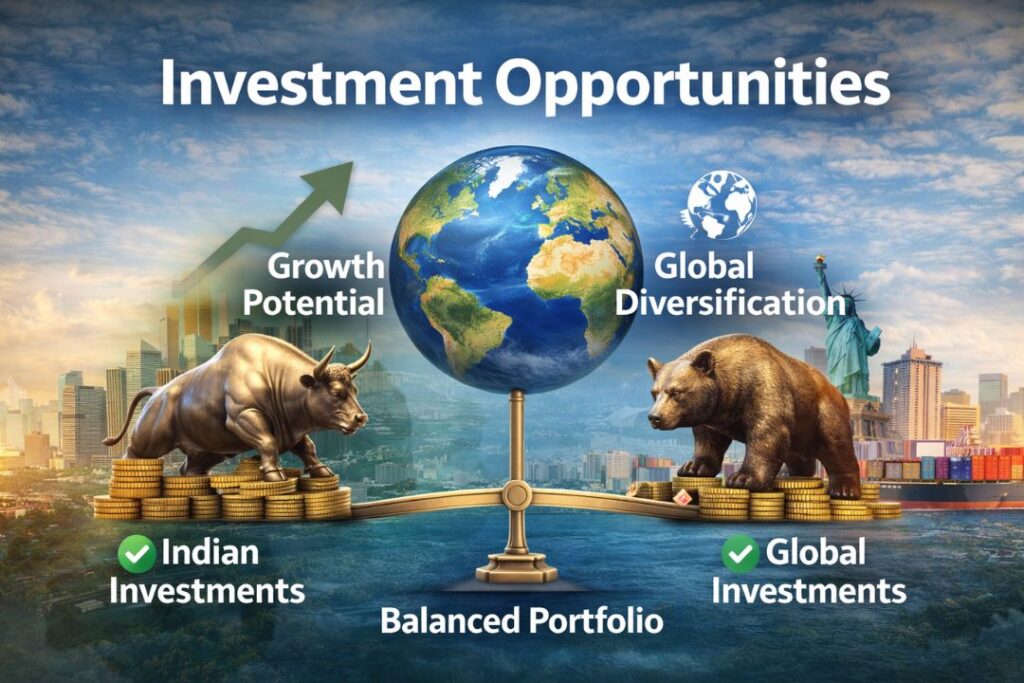
When comparing India vs Global Economy 2026, India offers higher growth potential but may come with emerging market instability. Meanwhile, developed markets offer stability but slower expansion.
Risks in 2026
Every economy faces risks. A fair comparison of India vs Global Economy 2026 must consider possible challenges.
Global Risks:
- Geopolitical conflicts
- Trade tensions
- High sovereign debt
- Financial market volatility
India-Specific Risks:
- Depend on global oil prices
- External trade slowdowns
- Inflation shocks
- Rural demand fluctuations
Despite these risks, India’s diversified economy and strong services sector help buffer external shocks.
In the broader India versus Global Economy 2026 debate, global instability could indirectly impact India, especially through trade and capital flows.
Stock Market Outlook
Stock markets reflect economical expectations.
Globally, markets may experience modest returns with periodic corrections due to interest rate uncertainties.
India’s stock market, on the other hand, has shown resilience backed by strong domestic investors and systematic investment plans (SIPs).
The comparison of India vs Global Economy 2026 in stock performance may show higher instability in India but potentially stronger long-term returns.
Long-term investors may benefit from diversity across both Indian and global equities.
Technological and structural transformation
Technology will play a defining role in shaping India vs Global Economy 2026 results.
Globally, automation and AI are transforming industries, reducing labor reliance, and increasing productivity.
India is quickly adopting digital infrastructure:
- UPI payments growth
- Expansion of 5G networks
- Digital public infrastructure
- Growth of IT exports
India’s digital revolution strengthens its position in the India versus Global Economy 2026 comparison, particularly in services and fintech sectors.
Long-Term Outlook Beyond 2026
Looking beyond short-term fluctuations, the structural story counts more.
In the long-term India versus Global Economy 2026 outlook:
- India benefits from the demographic dividend
- Global economies face aging populations.
- India has stronger consumption-driven growth
- Developed markets depend more on productivity gains.
Over the next decade, India’s contribution to global GDP is expected to increase steady.
This makes the India vs Global Economy 2026 comparison particularly important for global investors seeking high-growth exposure.
Government Policies & Reforms
When discussing India versus Global Economy 2026, policy direction becomes a major differentiating factor. Governments worldwide are adjusting fiscal and monetary strategies to stabilize growth.
Globally, many developed nations are focused upon:
- Tight monetary policy
- Debt reduction strategies
- Energy transition funding
- Defense spending increases
In comparison, India is balancing growth and fiscal discipline. Capital spending on infrastructure, railways, highways, digital infrastructure, and renewable energy continues to increase.
This policy contrast strengthens India’s position in the broader India versus Global Economy 2026 discussion. Whereas global economies focus on stabilization, India focuses on expansion and capacity building.
Demographic Advantage versus Aging Economies
One of the strongest structural advantages in the India versus Global Economy 2026 comparison is demographics.
Many developed nations face aging populations. This results in:
- Higher pension burdens
- Lower workforce participation
- Slower productivity growth
However, India benefits from:
- A young working population
- Increasing labor force participation.
- Expanding skilled workforce
This demographic dividend directly influences consumption, housing demand, automobile sales, digital adoption, and entrepreneurship.
In the long-term India vs Global Economy 2026 framework, demographics may become one of the most crucial growth drivers.
Currency strength & global trade position
Currency stability plays an important role in global competition.
India vs Global Economy 2026 comparison:
- US dollar remains dominant in global trade
- Eurozone stability depends on regional cohesiveness
- Emerging market currencies facing volatility
The Indian Rupee may experience moderate depreciation due to global dollar strength, but export competitiveness may benefit.
India’s trade diversification strategy reducing dependence on single-region imports — enhances resilience in the evolving India vs Global Economy 2026 environment.
Energy Security & Sustainable
Energy remains a critical factor in economic sustainability.
Globally, economies are transitioning towards renewable energy but still rely heavily on fossil fuels. Supply shocks could create inflation spikes.
India is simultaneously:
- Investing in solar and wind power
- Expanding green hydrogen projects
- Reducing crude oil dependence gradually
In the India versus Global Economy 2026 context, energy transition investments may create long-term cost efficiency and sustainability benefits for India.
Banking and Financial System Stability
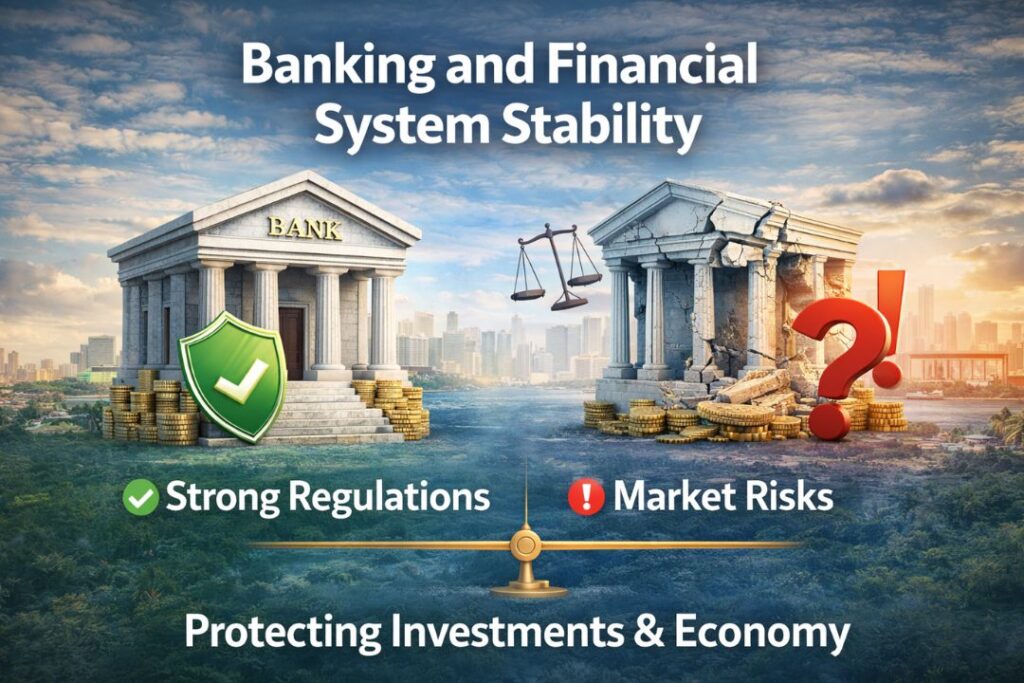
Financial sector stability is crucial when assessing India vs Global Economy 2026.
Globally, banks face:
- Higher exposure to interest rate cycles
- Debt refinancing risks
- Real estate corrections in certain regions
India’s banking sector has improved considerably:
- Reduce non-performing assets (NPAs)
- strong capital adequacy ratio
- Growth in retail lending
This strengthens India’s financial foundation in the broader India versus Global Economy 2026 outlook.
Startup Ecosystem and Innovation Power
Innovation ability defines future competitiveness.
India vs Global Economy 2026 comparison:
- The US leads in AI and advanced technology
- Europe focuses on green innovations
- China invests heavily in manufacturing technology
India is evolving as a global startup hub with:
- Growing unicorn companies
- Fintech innovation
- SaaS exports
- Digital Public Infrastructure Leadership
This innovation momentum gives India a competitive edge in the evolving India vs Global Economy 2026 scenario.
Rural versus Urban Growth Dynamics
India’s internal economic structure also adds depth to the India versus Global Economy 2026 comparison.
Urban India drives:
- IT services
- Financial Services
- Manufacturing growth
Rural India drives:
- agricultural output
- FMCG consumption
- Infrastructure demand
Balanced growth reduces systemic risk and strengthens long-term growth stability compared to several global economies facing urban stagnation.
Real Estate & Infrastructure
Infrastructure spending significantly influences economic development.
Globally, infrastructure expansion is slower due to financial constraints.
However, India is accelerating:
- Smart cities projects
- Expressway
- Metro rail networks
- Industrial corridors
This infrastructure push strengthens the structural story of India versus Global Economy 2026, positioning India for sustained economic expansion.
Consumer Market Expansion
Consumer spending is the backbone of economic development.
In developed economies, consumption growth may slow due to higher living costs and slower wage rises.
India’s growing middle class supports:
- E-commerce growth
- Automobile demand
- Housing expansion
- Digital subscription economy
This consumption-driven growth strengthens India’s performance in the India versus Global Economy 2026 comparison.
Global Recession Risk and India’s Resilience
One major debate in the India vs Global Economy 2026 discussion is recession likelihood.
Global recession risk arises from:
- High global interest rates
- Weak manufacturing output
- Trade slowdowns
India’s domestic demand-led model may help cushion global recession effects. However, export-oriented sectors may face temporary pressure.
Still, in the broader India versus Global Economy 2026 outlook, India appears relatively resilient compared to many advanced economies.
investment strategy perspective
From an investor viewpoint, India versus Global Economy 2026 presents a balanced opportunity.
Conservative Investors:
May prefer diverse global ETFs and developed market exposure.
Growth Investors:
May assign higher weight to Indian equities and emerging market themes.
Balanced Approach:
Diversity between Indian and global assets may provide stability and growth potential.
Strategic asset allocation becomes vital when analyzing India vs Global Economy 2026 for portfolio planning.
Final Strategic Outlook
The extended analysis of India versus Global Economy 2026 shows a structural divergence:
- India represents growth momentum.
- The global economy represents stability with moderate expansion
- India benefits from demography and infrastructure push
- Global markets profit from technological maturity
Over the next decade, India’s share in global GDP is expected to rise, strengthening its importance in global economic discussions.
Ultimately, the debate surrounding India vs Global Economy 2026 is not about choosing a winner, but understanding relative strengths and risks. Smart investors, entrepreneurs, and policymakers must monitor both national and global signals to make informed decisions.
The developing story of India vs Global Economy 2026 will continue shaping investment trends, business strategies, and global capital flows in the coming years.
Frequently Asked Questions (FAQs)
1.What is the main difference in India versus Global Economy 2026 growth outlook?
In the India versus Global Economy 2026 comparison, India is expected to grow at a faster rate (around 6–7%) compared to the global average of approximately 2.5–3%. India benefits from strong domestic demand and demographic benefit, while many developed economies face slower expansion due to high debt and aging populations.
2.Is India expected to surpass the global economy in 2026?
Yes, in the India vs Global Economy 2026 outlook, India is projected to surpass many major economies in terms of GDP growth. However, global economical conditions such as trade trends and geopolitical risks can still influence India’s performance.
3.What are the major risks in India versus Global Economy 2026?
The key risks in the India vs Global Economy 2026 scenario include global recession risks, high oil prices, inflation pressures, geopolitical tensions, and financial market instability. India also faces external trade-related risks despite strong domestic fundament.
4.How should investors approach India versus Global Economy 2026?
Investors analyzing India vs Global Economy 2026 should consider diversity. Indian markets may offer higher growth potential, while global markets offer relative stability. A balanced portfolio with exposure to both regions can minimize overall investment risk.
5.Why is demographic advantage important in India versus Global Economy 2026?
In the India vs Global Economy 2026 comparison, India’s young population supports long-term consumption, workforce expansion, and productivity growth. Many developed economies face aging populations, which may limit long-term economical expansion.
Disclaimer
This article on India versus Global Economy 2026 is for informational purposes only and does not constitute financial or investment advice. Economic predictions may change based on market conditions. please consult a professional advisor before making any financial decisions
