
Introduction
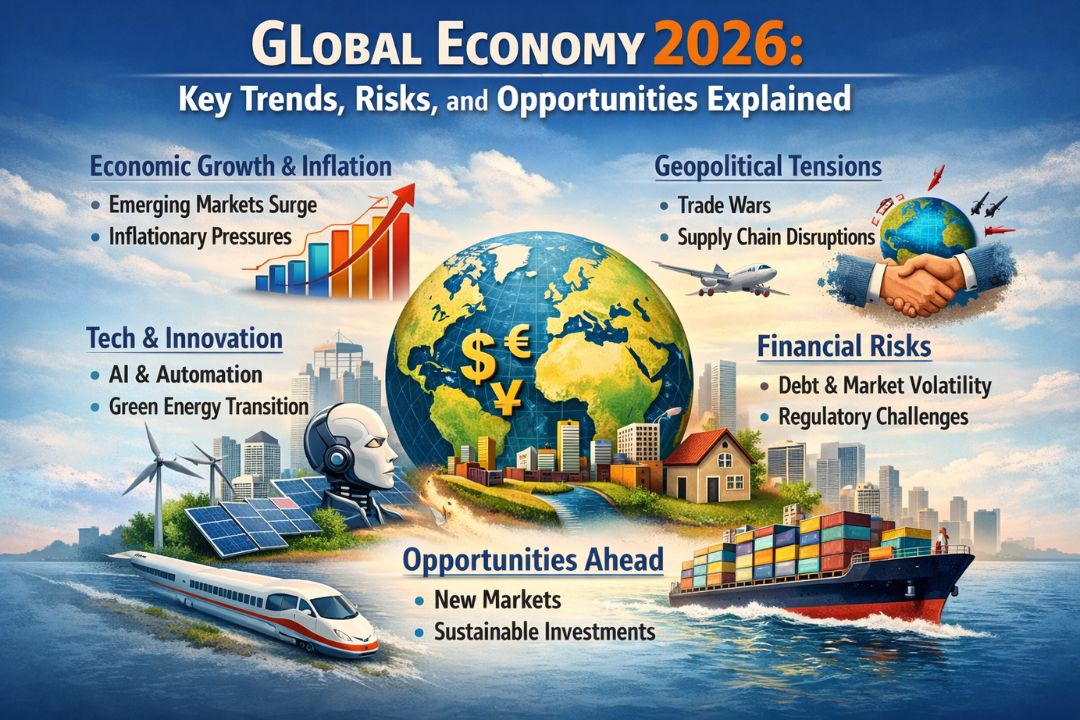
The Global Economy 2026 is entering a transformative phase. After years of inflation shocks, geopolitical tensions, and rapid technological change, the global economy is adjusting to a new normal. Investors, business owners, and individuals must understand how economic cycles, inflation trends, interest rate movements, and global trade shifts will shape the global economy in 2026 and impact their financial future.
In this detailed guide, we shall explore:
- Current global economic outlook
- Inflation and interest rates trends
- Recession risks
- Emerging Markets
- Opportunity for investors in 2026
This article is designed for beginners as well as serious investors who want clarity on how the economy really functions.
Understanding the Current Global Economic Scenario
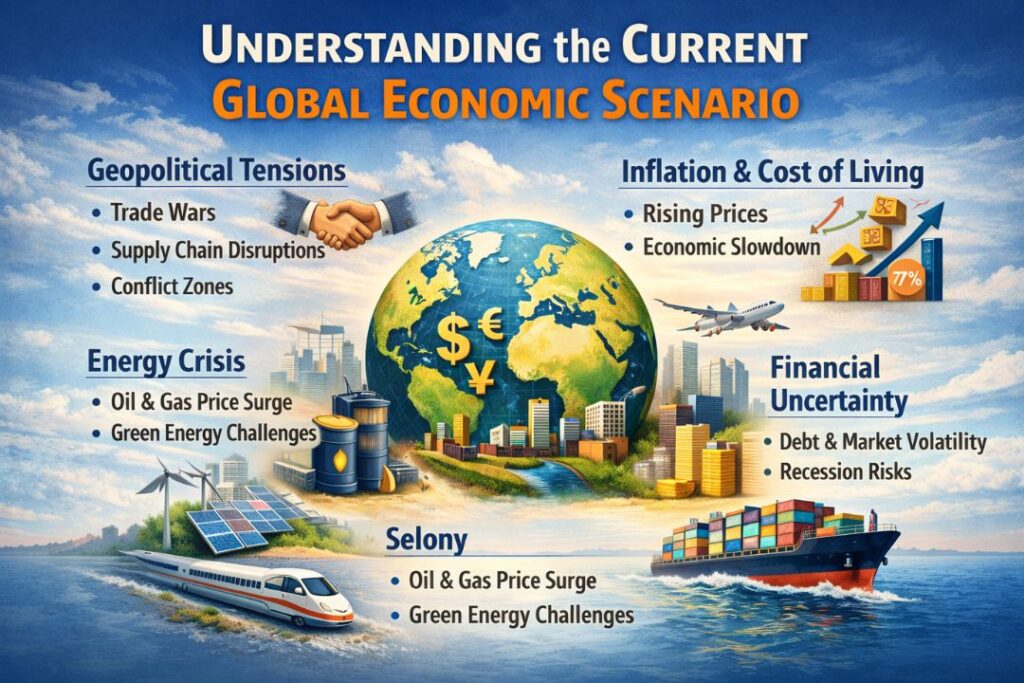
In the Global Economy 2026, the world economy is shaped by three major forces
Controlled but sticky inflation.
Most major economies have brought down inflation from peak levels seen earlier in the decade. However, inflation remains slightly above long-term targets in many nations.
Moderate Growth
In the Global Economy 2026, global GDP growth is steady but not exponential. Developed economies are expanding at a slower pace, while emerging markets are showing comparatively stronger growth and economic momentum.
Higher for Longer Interest Rates
Central banks have maintained prudent monetary policies to avoid another inflation surge.
These three elements define the world economic structure today.
Inflation Trends in 2026
Inflation plays a vital role in shaping the economy. When inflation rises:
- Purchasing power declines
- Interest rates increase
- Borrowing becomes expensive
- Business expansion slows
In 2026, inflation is:
- Lower than crisis years
- But still above ideal 2% targets in many areas
What This Means for You
- Savings must beat inflation
- Fix deposits may not be enough
- Equities and long-term investments become important
Inflation pushes people towards smarter investment strategies.
Interest rates and central bank policies
Central banks control economic momentum using interest rates.
Rates increase
When economy slows down – Rates decrease
Currently:
- Interest rates remain moderate high
- Central banks are careful about cutting rates too fast
Impact on the Economy:
- Home loans are expensive
- Business borrowing slows
- The stock market becomes selective
However, stable rates also create predictability, which markets prefer.
Is a Global Recession Coming?
One of the biggest issues in 2026 is recession risk.
Signs supporting recession fear:
- Slowing manufacturing output
- Weak consumer spending in certain regions
- Geopolitical uncertainties
Signs Against Recession:
- Strong labor markets
- Stable banking systems
- controlled inflation
Most economists believe 2026 is more likely to see slow growth rather than a deep depression.
Emerging Markets:The Growth Engine
Emerging economies are becoming the backbone of global development.
Nations in Asia and Africa are:
- Experience population growth
- Increasing digital adoption
- Expanding middle class
These markets offer:
- Higher GDP growth rates
- Expanding consumption
- Infrastructure development opportunity
For investors, emerging markets offer long-term potential but with higher risk.
Technology and AI
Artificial intelligence, automation, and digital finance are reshaping economies.
Major impacts include:
- Increased productivity
- Job market transformation
- Creation of new industries
- Faster global connectivity
Technology is no longer just a sector—it is an economic driver.
Investors focusing on innovative sectors may benefit from long-term growth.
global trade and supply chain shifts
Supply chains are no longer concentrated in one area.
Businesses are:
- Diversifying production
- Reducing dependence on single countries.
- Investing in local production
This shift improves economic resilience but increases costs in the short run.
Opportunity for investors in 2026
Notwithstanding uncertainties, economic transitions create opportunities.
Quality Stocks
Companies with strong balance sheets and consistent profits remain appealing.
Long-Term Equity Investing
Economic recessions often create buying opportunities.
Diversified Portfolios
Asset allocation across equities, debt, and gold reduces risk.
Emerging Sectors
AI, renewable energy and digital finance sectors show long-term promise.
Risks to Watch in the Global Economy 2026
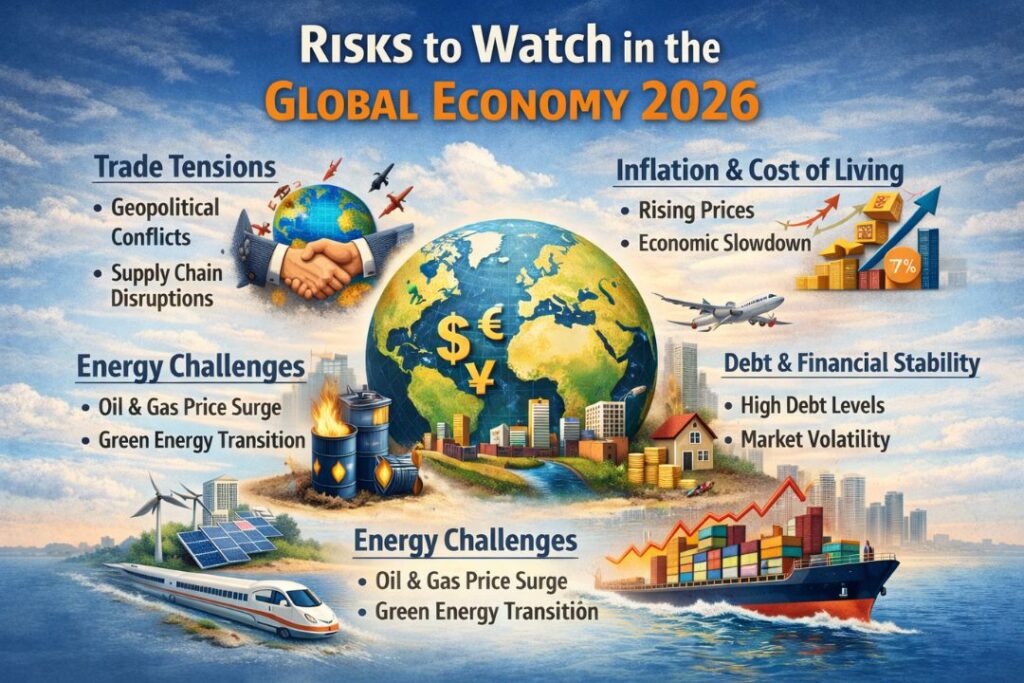
Investors must monitor:
- Sudden inflation spikes
- Geopolitical conflicts
- Energy price shocks
- Currency fluctuations
Risk awareness enhances decision-making.
How individuals can prepare financially.
Here are the smart steps:
- Maintain emergency fund
- Avoid high-interest debt
- Investment regularly (SIP approach)
- Diversify assets
- Think long-term
Economic cycles are temporal. Wealth creation demands patience.
Financial Policy and Government Spending in 2026
Monetary policy (interest rates) as well as fiscal policy should influence the pan-economy. Fiscal policy etle:
- Government spending
- Tax policies
- Infrastructure investment
- Subsidies and incentive packages
By 2026, Ghana will continue to focus on country’s infrastructure:
- Green energy projects
- Transportation upgrades
- Digital infrastructure
- Defense spending
Why This Matters?
Government spending should create demand in the economy.
What infrastructure projects should be undertaken?
- Employment
- Private investment attracted
- GDP growth improved
Investors want to create opportunities in a few sectors — especially construction, energy, and capital goods companies.
Consumer spending patterns are changing
Consumer behavior is the backbone of the Global Economy 2026, as spending patterns directly influence growth, business profits, and overall economic stability.
Spending trends are expected to change by 2026:
- Experiences > material goods
- Digital subscriptions growth
- Sustainable products demand
- Health and wellness spending increased
Let consumers remain cautious and reduce luxury spending, while essential and digital services should remain stable.
Investment Insight:
Companies je:
- Subscription model to follow
- Provide essential services
- Let’s build a digital ecosystem
These economic slowdowns should perform relatively stable.
The Role of Energy Prices in the Global Economy 2026
Energy prices historically have not had a heavy impact on the economy.
High oil prices
- Transportation cost increases
- Manufacturing cost increases
- Inflation pressure vadhe
Lower energy prices
- Business margins improve
- Consumer spending improves
By 2026 renewable energy shift will be the global macro theme.
Solar, wind, EV adoption and battery storage industries will bring structural transformation to the economy.
A long-term growth story — with short-term volatility.
currency movements and global trade
Currency strength and economy are no hidden factors.
Strong currency:
- Cheaper imports
- Exports expensive
Weak currency:
- Exports competitive
- Inflation pressure increases
Investors who want to have international exposure need to consider currency risk.
Diversification through global ETFs or international mutual funds currency volatility may shake the balance.
employment trends and the future of jobs
Labor market needs to strengthen the health and economy.
In the Global Economy 2026, these trends are becoming increasingly strong and are shaping future economic growth.:
- Remote work normalization
- Gig economy growth
- AI-driven job transformation
- Skill-based hiring increase
Automation replaces these repetitive jobs, and pans new technology roles that create them.
Long-term economic strength should be linked with skill development.
Individuals mate:
- Continuous learning
- financial literacy
- Multiple income streams
These are the factors that should improve economic resilience.
Family Debt and Financial Stability
Household debt economic risk indicator.
High debt levels:
- Reduce spending
- increase default risk
- Pressure on the banking system
Moderate debt + increasing income = healthy economy.
By 2026, in developed economies, debt will be manageable, interest rates will be high across the board and EMI pressure will be high.
Investors and individuals want simple rule of thumb:
Avoid high-interest debt
Prioritize savings
Invest surplus wisely
Long-term structural growth themes
Short-term economic noise should be isolated, pan structural trends should create long-term wealth.
Major structural themes:
- Digital transformation
- Artificial Intelligence
- Clean energy transition
- Healthcare innovation
- Urbanism in emerging markets
These topics need to be studied and shaken in 10-20 years.
Smart investors may want to focus on structural opportunities amid cyclical fear.
Psychological Cycles in the Global Economy 2026
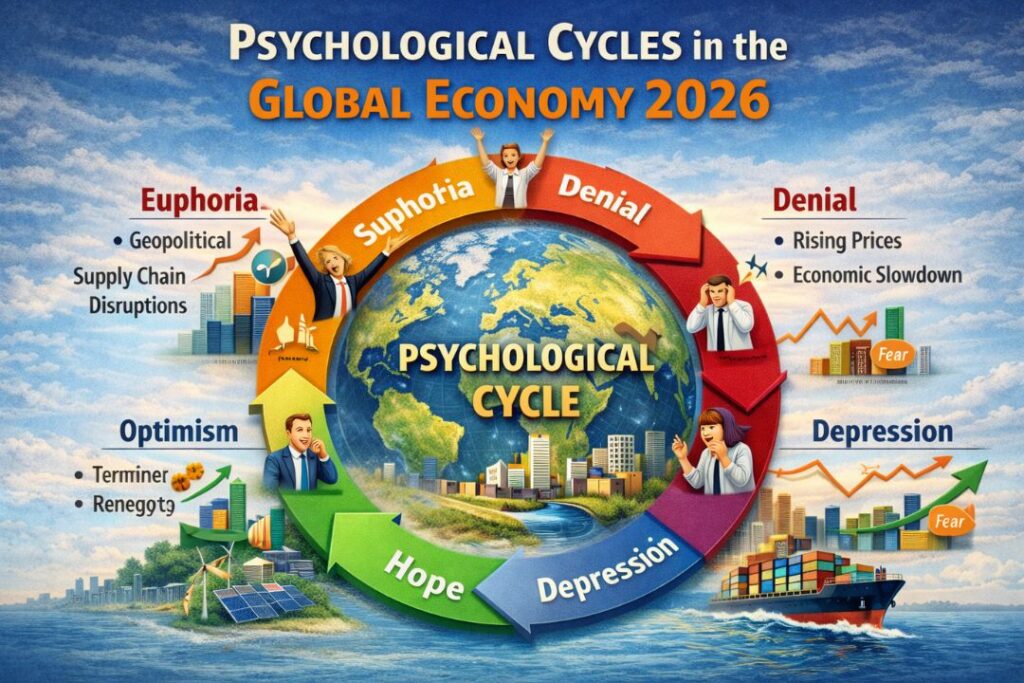
The Global Economy 2026 is not just about numbers — it is also driven by human psychology
Market cycle emotional stages:
- Optimism
- Euphoria
- Anxiety
- Fear
- Recovery
If the news is negative then you will create the best long-term investment opportunity.
Successful investors:
- I don’t panic
- Have a long-term vision
- Take decisions based on data
How Economic Uncertainty Builds Wealth in the Global Economy 2026
Economic uncertainty has plagued many people, pan historically:
Great wealth created during:
- Recession Periods
- Market corrections
- Fear-driven selloffs
The reason is simple:
Quality assets are available at discount.
Patience + discipline= wealth multiplier
Final Deep Insight: The Global Economy 2026 Is Cyclical, Wealth Building Is Strategic
Economic slowdown is only temporary.
Inflation is temporary.
Interest rate cycles should be temporary.
Pan disciplined investing creates permanent wealth.
2026 ni economy:
Stable but cautious
Growth but moderate
Opportunity but selective
Je loko:
- Financially prepared
- Keep a diversified portfolio
- Long-term mindset should be followed.
You want to shake the environment by growing it.
FAQ
Q1. Is there a recession in 2026?
Most experts predict slow growth rather than a serious global recession.
Q2. Is 2026 a good year to investment?
Long-term investors can find opportunities in steady and emerging sectors.
Q3. How does inflation impact the economy?
Inflation reduces buying power and influences interest rates and economic growth.
Q4. How do interest rates affect stock markets?
Higher interest rates increase borrowing costs and may slow corporate growth, impacting stock valuations.
Q5. Why are emerging markets important in 2026?
Emerging markets contribute higher GDP growth and expanding consumer demand.
Q6. Is diversification important during economic uncertainty?
Yes, diversification reduces risk and protects portfolios from sector-specific downturns.
Conclusion
The global economy in 2026 is stable but careful. Inflation is under control but not eliminated. Growth is medium but positive. Recession fears exist but are not predominant.
This environment demands: For individuals and investors:
- Smart financial planning
- Diversified investments
- Long-term thinking
- Continuous learning
Economic uncertainty always exists — but informed decisions create opportunities.
Disclaimer
The information provided in this article on the Global Economy 2026 is for educational and informational purposes only. This does not constitute financial, investment, or legal advice. Economic trends, market conditions, and investment results may change over time and involve risk. Readers are strongly encouraged to conduct their own research or consult a certified financial advisor before making any investment or financial decisions. The author and website shall not be held liable for any financial losses arising from the use of this information.
