
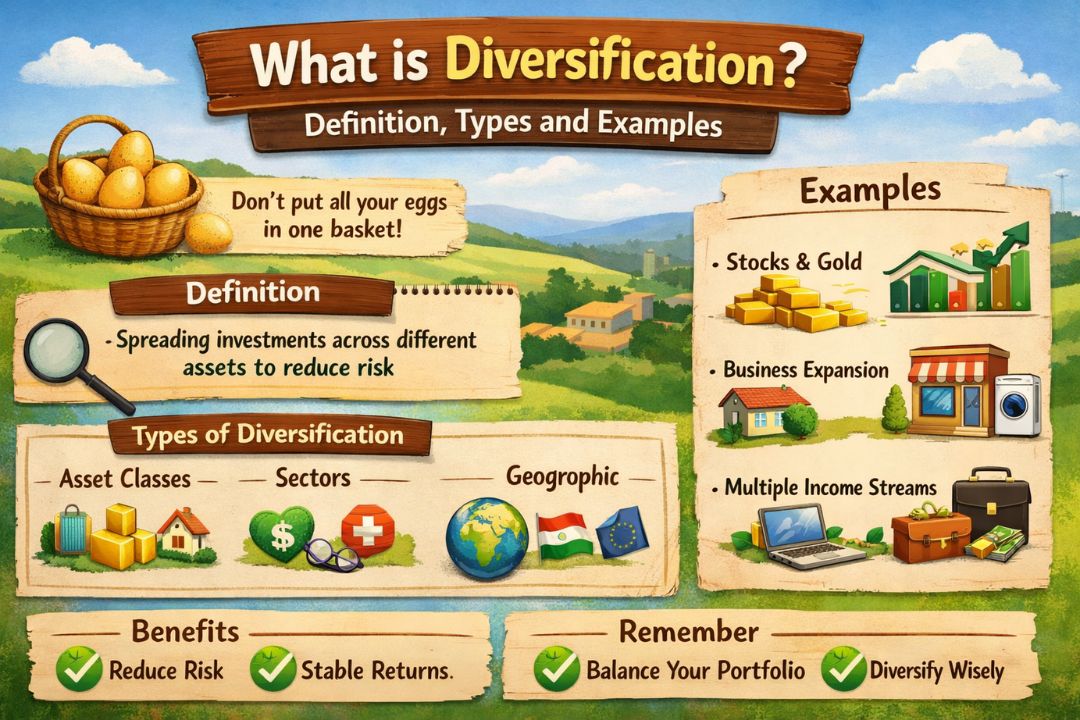
Diversification is one of the most important concepts in finance and investing, yet it is often misunderstood. At its core, diversification is about spreading your investments or business activities across different areas to reduce risk and create more stable returns over time.
In simple terms, diversification means not relying on just one option. Instead of putting all your money, effort, or resources into a single place, you distribute them across multiple opportunities. This way, if one area performs poorly, others can help balance the loss.
The idea behind diversification is very practical and has been used for centuries. It is based on a simple principle if you avoid concentration in one place, you reduce the chances of losing everything at once.
What is diversification and why is it important in investing? Diversification is a powerful strategy that helps investors reduce risk and achieve stable returns by investing in different assets, sectors, and markets. In this article, we will understand diversification meaning, types, benefits, and examples in simple words.
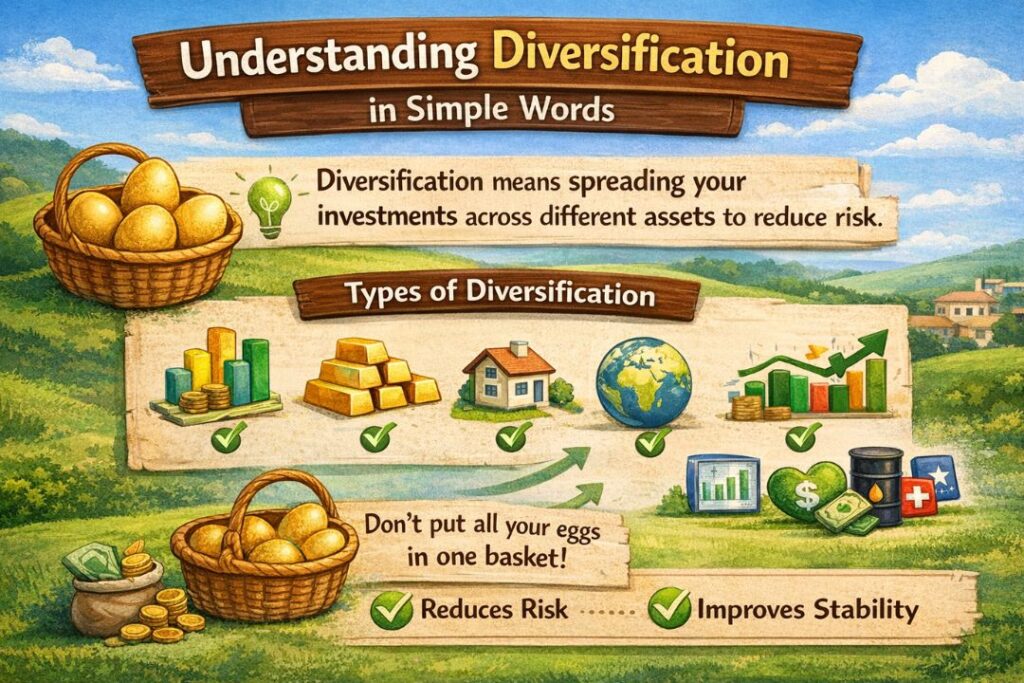
Understanding Diversification in Simple Words
Imagine you have all your savings invested in just one company. If that company faces a crisis, your entire investment is at risk. But if you spread your money across different companies, industries, or assets, even if one fails, others may still perform well.
This approach helps in managing uncertainty. Markets are unpredictable, and no one can accurately predict what will happen next. Diversification helps you stay protected in such situations.
Definition of Diversification
Diversification is a risk management strategy that involves allocating investments across various financial instruments, industries, or categories to minimize exposure to any single risk.
The main goal of diversification is not to maximize profits instantly but to create a balance between risk and return.
Why Diversification is Important
Diversification plays a key role in building long-term financial stability. It helps investors and businesses survive market fluctuations and economic changes.
One of the biggest benefits of diversification is risk reduction. When investments are spread across different areas, the impact of a loss in one area becomes smaller.
Another advantage is stable returns. Instead of experiencing extreme highs and lows, diversification creates a smoother financial journey.
It also helps in capturing opportunities. Different sectors perform well at different times, so diversification allows you to benefit from multiple growth areas.
Types of Diversification
Diversification can be applied in different ways depending on your financial goals, risk tolerance, and strategy.
Asset Class Diversification
This type of diversification involves investing in different categories of assets such as stocks, bonds, gold, real estate, and fixed deposits.
Each asset behaves differently under various economic conditions. For example, when stock markets fall, gold often performs well. This balance helps reduce overall risk.
Sector Diversification
Sector diversification means investing across multiple industries instead of focusing on just one.
For example, you can invest in banking, IT, healthcare, energy, and consumer goods sectors. If one sector faces a downturn, others may still grow.
Geographic Diversification
Geographic diversification involves spreading investments across different countries or regions.
Different economies grow at different rates. By investing globally, you reduce dependence on a single country’s performance.
Market Capitalization Diversification
This type includes investing in companies of different sizes such as large-cap, mid-cap, and small-cap.
Large-cap companies are generally stable, while small-cap companies offer higher growth potential but with more risk. A mix of both provides balance.
Time Diversification
Time diversification means investing regularly over a period instead of investing all your money at once.
For example, investing monthly through SIP (Systematic Investment Plan) helps reduce the impact of market volatility.
Diversification in Business
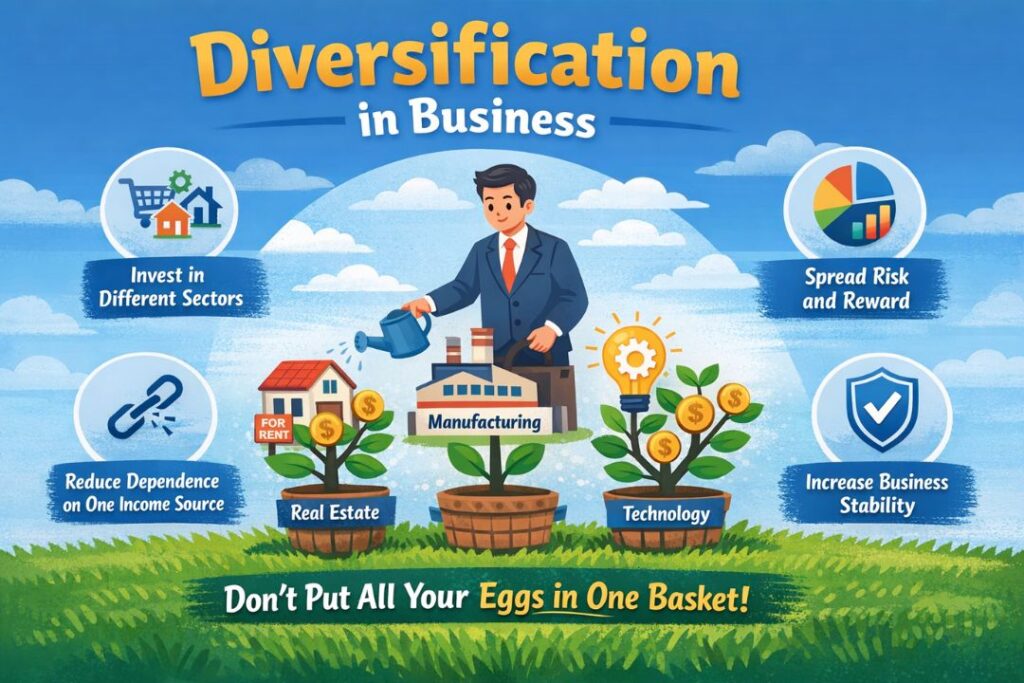
Diversification is not limited to investments. Businesses also use diversification strategies to grow and reduce risks.
When a company depends on a single product or market, it becomes vulnerable to changes. By expanding into new areas, companies can create multiple sources of revenue.
Types of Business Diversification
Horizontal diversification happens when a company adds related products to its existing business.
Vertical diversification involves expanding into different stages of production or supply chain.
Conglomerate diversification occurs when a company enters completely unrelated industries.
Real-Life Examples of Diversification
A simple example is an investor who invests in stocks, gold, mutual funds, and fixed deposits. When one investment performs poorly, others help balance the overall performance.
Another example is a company that starts with one product and later expands into different product categories to reduce dependence on a single source of income.
Even individuals diversify their income by having a job, side business, and investments.
Benefits of Diversification
Diversification offers several advantages. It reduces risk by spreading investments. It provides more stable returns over time. It helps investors take advantage of opportunities in different sectors.
It also protects against market volatility and economic uncertainty. Additionally, it improves financial discipline and long-term planning.
Limitations of Diversification
While diversification reduces risk, it does not eliminate it completely. There is always some level of uncertainty in the market.
Over-diversification can also become a problem. Managing too many investments can reduce returns and make tracking difficult.
Another limitation is that diversification requires knowledge and planning. Without proper understanding, it may not be effective.
Diversification vs Concentration
Diversification spreads risk across multiple areas, while concentration focuses on a single investment or sector.
Concentration can generate higher returns if successful but carries higher risk. Diversification, on the other hand, provides stability and reduces the chance of major losses.
Common Mistakes to Avoid
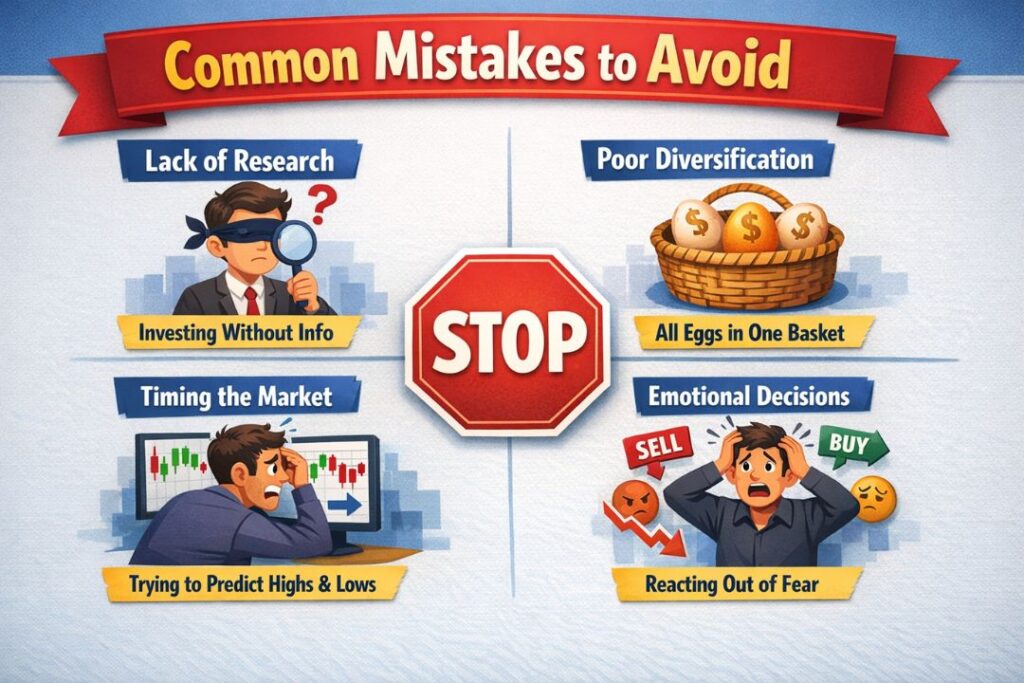
Many people believe they are diversified when they are not. Investing in multiple stocks from the same sector is not true diversification.
Another mistake is ignoring asset allocation. Proper balance between different asset classes is important.
Not reviewing your portfolio regularly can also reduce the effectiveness of diversification.
How to Build a Diversified Portfolio
Start by identifying your financial goals and risk tolerance. Decide how much you want to invest in different asset classes.
Spread your investments across sectors and company sizes. Invest regularly instead of timing the market.
Review your portfolio periodically and make adjustments when necessary.
Diversification in India
In India, common diversification options include equity markets, mutual funds, gold, real estate, and fixed deposits.
Investors often combine these options to create a balanced portfolio that provides both growth and stability.
Final Thoughts
Diversification is not about avoiding risk completely but about managing it smartly. It helps you stay prepared for uncertainties and build long-term financial security.
Whether you are an investor, a business owner, or someone planning your finances, diversification is a strategy that should not be ignored.
The key is to stay consistent, make informed decisions, and avoid putting everything in one place.
FAQs
Q1. What is diversification in simple terms?
Diversification means spreading your investments across different options to reduce risk.
Q2. Is diversification suitable for beginners?
Yes, it is one of the safest and most recommended strategies for beginners.
Disclaimer
The information provided in this article is for educational and informational purposes only. It should not be considered as financial, investment, or professional advice.
While every effort has been made to ensure the accuracy and reliability of the information, no guarantee is given regarding its completeness or correctness. The content is based on general market knowledge and may change over time.
Investing in financial markets involves risk, including the possible loss of principal. Readers are advised to conduct their own research and consult with a qualified financial advisor before making any investment decisions.
