
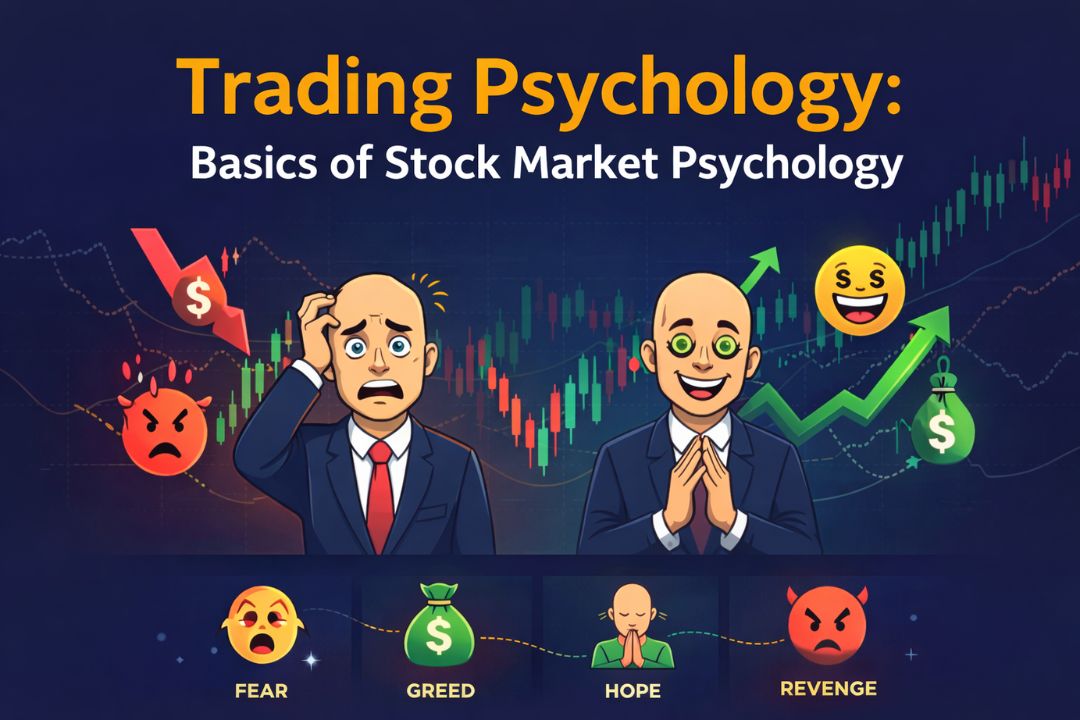
When most people enter the stock market, they believe success depends only on strategies, indicators, or tips. They search for the “perfect setup” or the “best signal.” But after spending some time trading, reality hits hard even the best strategy fails if your mind is not under control.
This is where trading psychology comes in.
Trading psychology is not about charts, indicators, or news. It is about how you think, react, and behave when real money is on the line. In fact, many experienced traders say:
“Trading is 80% psychology and only 20% strategy.”
From my experience, I have realized that even a simple strategy can make money — but only if your mindset is strong. Otherwise, even the best system will fail.
In this blog, we will deeply understand the basics of stock market psychology, with real-life examples and practical insights that feel real — not textbook.
What is Trading Psychology?
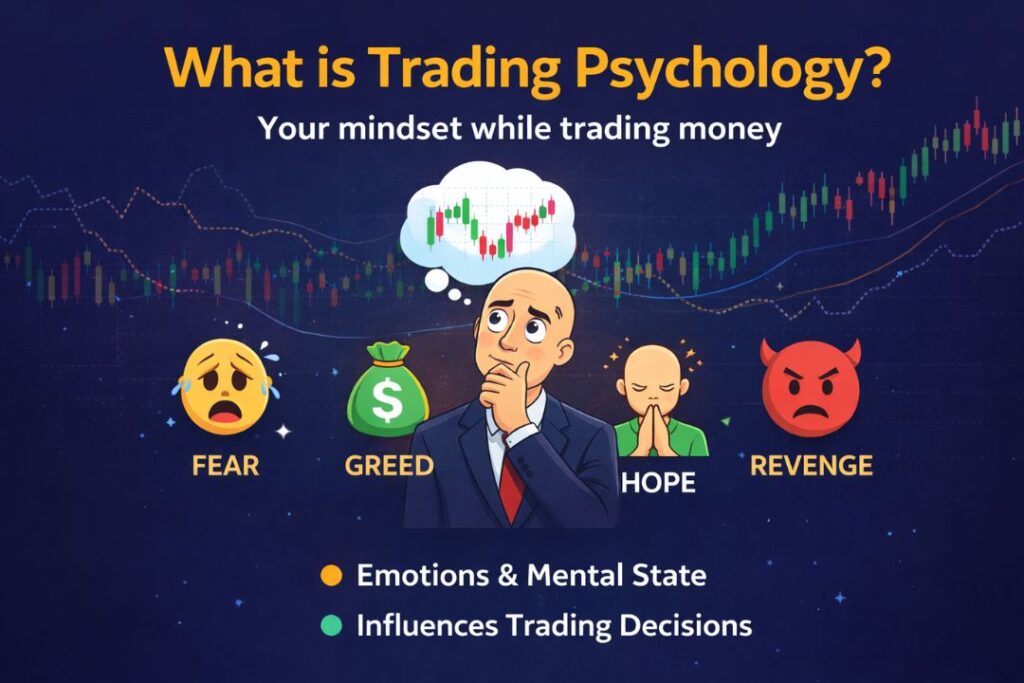
Trading psychology refers to the emotions and mental state that influence your trading decisions.
Every trader faces emotions like:
- Fear
- Greed
- Hope
- Regret
- Overconfidence
These emotions directly affect:
- Entry timing
- Exit timing
- Position size
- Risk management
Simple Definition:
Trading psychology = Your mindset while trading money
Why Trading Psychology is Important
Let’s understand with a simple example:
Example:
You take a trade:
- Entry: ₹100
- Target: ₹110
- Stop loss: ₹95
Now price goes to ₹105.
What happens?
- You feel greedy → “Let’s wait for more profit”
- Suddenly price falls to ₹98
- Now you feel fear → “Let’s exit before more loss”
Result:
You exit in loss even though your setup was correct.
My Realization (Human Touch)
I have personally noticed this many times not because the strategy was wrong, but because I couldn’t control my emotions at the right moment.
That’s when I understood:
“Market is not against you your mind is.”
Core Emotions in Trading
1. Fear
Fear is the biggest enemy in trading.
When fear happens:
- After a loss
- During volatility
- When money is at risk
Effects:
- Early exit
- Missing good trades
- Hesitation
Example:
You see a perfect breakout, but because your last trade was a loss, you skip it.
That trade hits target and you regret.
2. Greed
Greed is equally dangerous.
When greed happens:
- After profit
- During strong trends
- When you want “more profit”
Effects:
- Holding too long
- Not booking profit
- Overtrading
Example:
Profit ₹500 → You want ₹1000 → Market reverses → Loss
3. Hope
Hope is silent but dangerous.
Example:
- You are in loss
- Instead of exiting, you think: “Maybe it will come back”
But market keeps falling.
4. Revenge Trading
This happens after loss.
Example:
You lose ₹500 → You take another trade immediately → Lose ₹1000
Now emotions control you, not logic.
5. Overconfidence
After few wins:
- “Now I understand market”
- “I can’t lose now”
Result:
Big loss.
The Psychology Trap Cycle
Most beginners follow this cycle:
- Start trading with excitement
- Make small profit
- Become overconfident
- Take big risk
- Face big loss
- Try to recover (revenge trading)
- Lose more
- Quit or blame market
My Thought (Real Line)
Honestly, I feel every trader goes through this phase once. It’s like a hidden test of patience and discipline.
Discipline: The Real Superpower
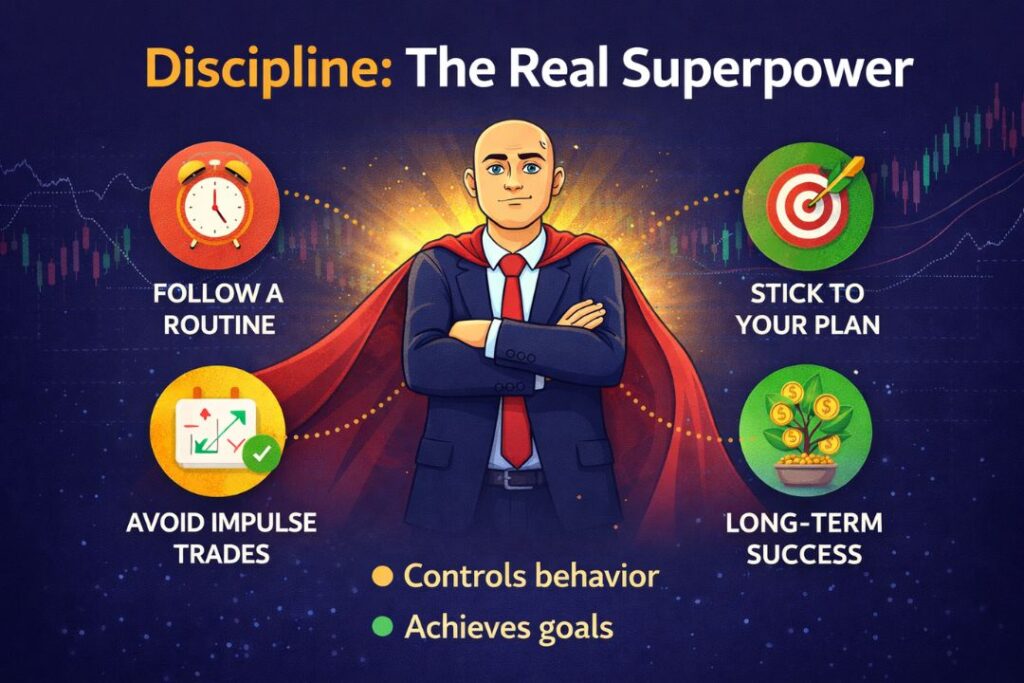
In trading, discipline is more powerful than intelligence.
Discipline means:
- Following your plan
- Respecting stop loss
- Not overtrading
- Waiting for setup
Example:
Two traders:
- Trader A: Smart but emotional
- Trader B: Average but disciplined
Trader B wins long-term.
Risk Management Psychology
Risk management is not just technical it’s psychological.
Basic Rule:
- Never risk more than 2% per trade
But psychologically:
- You feel “this trade will work”
- You increase quantity
That’s where loss begins.
My Learning
I realized:
“Small loss is part of game, big loss is mistake.”
Patience in Trading
Patience is underrated.
Truth:
- Market gives opportunity daily
- But not every minute
Problem:
- Traders feel “I must trade today”
Result: Wrong trades
Example:
No setup → Still you trade → Loss
My Line
Sometimes the best trade is:
“No trade.”
Emotional Control Techniques
1. Use Stop Loss Always
- Removes emotional decision
- Protects capital
2. Trade Small Amount
- Low stress
- Better decision
3. Follow Fixed Rules
Example:
- Entry rule
- Exit rule
- Risk rule
4. Avoid Overtrading
- Quality > Quantity
5. Take Break After Loss
- Refresh mind
- Avoid revenge trading
Real-Life Trading Example
Scenario:
You see Nifty breakout.
- Entry: CALL option
- Price goes up → Profit ₹300
Now decision:
- Book profit?
- Or hold?
Emotional conflict:
- Greed: “Let it go more”
- Fear: “What if it falls?”
Right decision depends on discipline, not emotion.
Beginner vs Professional Mindset
| Beginner | Professional |
|---|---|
| Focus on profit | Focus on process |
| Emotional decisions | Rule-based decisions |
| Overtrading | Selective trading |
| No patience | Waits for setup |
| Blames market | Improves self |
Long-Term Psychology
Successful traders think long-term.
They understand:
- Every trade will not win
- Loss is part of system
- Consistency matters
My Real Thought
I have seen that once you accept loss as part of trading, your stress reduces a lot.
How to Build Strong Trading Mindset
Accept Reality
- No strategy is 100% accurate
Control Expectations
- Don’t expect daily profit
Focus on Learning
- Every trade teaches something
Keep Journal
Write:
- Why you entered
- Why you exited
- What you felt
This improves psychology fast.
Common Psychological Mistakes
- Trading without plan
- Ignoring stop loss
- Copying others blindly
- Emotional trading
- Overconfidence
Final Golden Rules
- Control emotions, not market
- Small loss is okay
- Big loss is dangerous
- Discipline > Strategy
- Patience = Profit
The Role of Habits in Trading
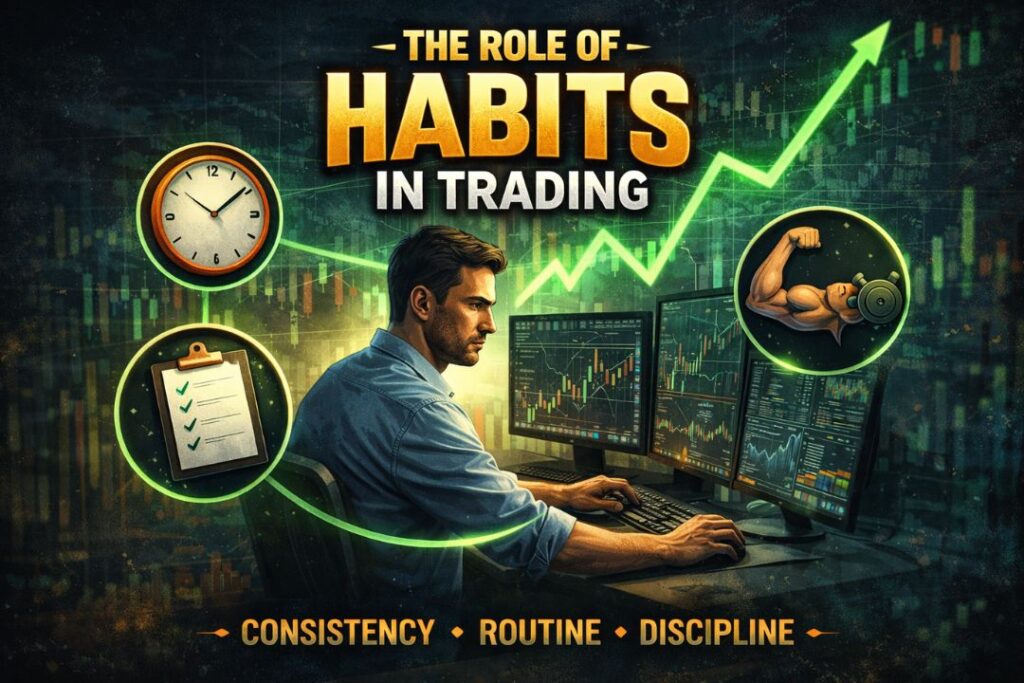
One thing I have personally realized is that trading is nothing but a reflection of your daily habits.
If you are:
- Impatient in life → You will be impatient in trading
- Undisciplined → You will break rules in trading
- Emotional → You will take emotional trades
That means trading is not just a skill, it’s a personality game.
Example:
If someone cannot wait in a queue for 5 minutes, how will they wait for a perfect trade setup?
My Real Thought
I strongly feel that improving your life habits automatically improves your trading performance.
The Psychology of Loss Acceptance
Most traders struggle not because of losses, but because they cannot accept losses.
Truth:
Loss is not failure it is part of trading.
But what happens:
- Trader takes loss personally
- Ego gets hurt
- Tries to recover immediately
That’s where bigger losses happen.
Example:
- Loss: ₹300
- Emotion: “I must recover this”
- Next trade → Loss ₹1000
My Learning
“The faster you accept loss, the faster you grow in trading.”
The Illusion of Control
Many traders think:
- “I can predict market”
- “I know what will happen next”
But reality:
Market is uncertain.
No one controls the market not even big institutions fully.
Psychological Mistake:
Trying to be “right” instead of being “profitable”
Example:
You hold losing trade just to prove you are right.
Result: Bigger loss
The Power of Detachment
This is one of the most powerful concepts.
Detachment means:
- Not being emotionally attached to profit or loss
- Seeing trading as a process
Example:
Professional trader thinks:
- “This is just one trade out of 100”
Beginner thinks:
- “This trade must work”
My Realization
Once I started thinking in series instead of single trade, my stress reduced a lot.
The Danger of Social Media Influence
Today, social media affects trading psychology heavily.
You see:
- Big profits screenshots
- “100% accuracy” claims
- Easy money mindset
This creates:
- Unrealistic expectations
- Pressure to perform
- Overtrading
Reality:
Nobody shows losses publicly.
My Honest Thought
I feel social media is one of the biggest reasons why beginners lose money — because they start comparing their journey with others.
FOMO (Fear of Missing Out)
FOMO is very common in trading.
Situation:
- Market moving fast
- Everyone is making profit
- You feel left out
- You enter late.
- Market reverses.
- You lose.
Example:
Nifty already moved 100 points
You enter CALL late
Market reverses 50 points
My Line
“If you miss a trade, you miss nothing. But if you chase a trade, you risk everything.”
Building Confidence the Right Way
Confidence is important but it should be earned, not assumed.
Wrong confidence:
- Based on luck
- Based on 2–3 winning trades
Right confidence:
- Based on consistency
- Based on discipline
- Based on following rules
Example:
Trader A wins 3 trades randomly → Overconfident → Big loss
Trader B follows system → Slow growth → Long-term success
The Importance of Routine
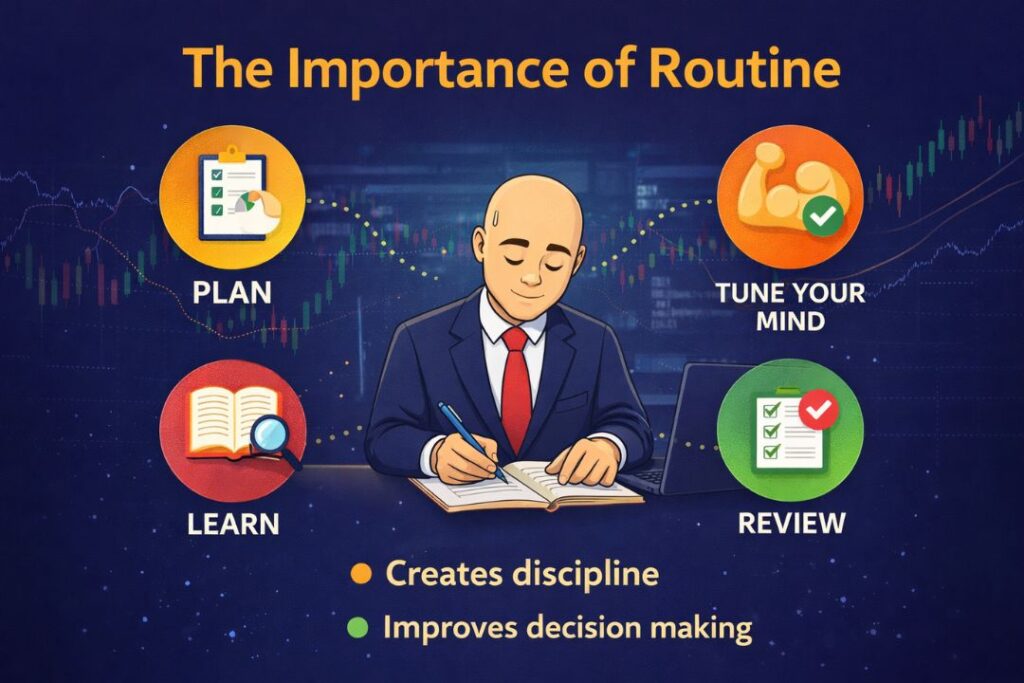
Successful traders follow routine.
Example routine:
- Analyze market before open
- Define levels
- Wait for setup
- Trade limited times
- Review trades
Why routine matters:
- Reduces emotional decisions
- Creates consistency
- Builds discipline
My Experience
I have noticed that whenever I trade randomly without routine, my results get worse.
Mental Fatigue in Trading
Trading is mentally exhausting.
Signs:
- Taking random trades
- Ignoring rules
- Feeling frustrated
Solution:
- Take breaks
- Limit screen time
- Trade less but better
My Thought
Sometimes stepping away from charts gives better clarity than staring at them all day.
The Role of Self-Awareness
Self-awareness means understanding:
- Your strengths
- Your weaknesses
- Your emotional triggers
Example:
If you know:
- You panic during loss
You will use strict stop loss
My Learning
The more you understand yourself, the better trader you become.
Consistency Over Perfection
Many traders search for:
- Perfect strategy
- Perfect entry
- Perfect exit
But trading is not about perfection.
It is about consistency.
Example:
- Daily ₹200 profit consistently
Better than one-time ₹5000 profit + big losses
My Line
“In trading, small consistent wins build big success.”
The Psychological Edge
In the end, what separates winners from losers is not strategy it is mindset.
Winning trader:
- Calm
- Disciplined
- Patient
- Emotionally strong
Losing trader:
- Impulsive
- Emotional
- Greedy
- Fearful
Final Deep Insight
If you observe deeply, trading is like a mirror.
It reflects:
- Your patience
- Your discipline
- Your emotions
My Final Thought
I genuinely feel that trading is not just a way to make money it is a journey of self-improvement.
Because in this journey, you don’t just learn about charts…
You learn about yourself.
At the end of the day, the market does not care about:
- Your opinion
- Your prediction
- Your emotions
It only moves based on demand and supply.
Your job is not to control the market
Your job is to control your mind.
“The day you stop reacting emotionally to the market, that’s the day you start thinking like a real trader.”
“When I first started trading, I thought the market was difficult. But later I realized the real challenge was never the market, it was my own mindset.”
Conclusion
Trading is not just about charts it is about your mind.
You can learn indicators in a few days, but mastering your emotions takes time. The real challenge is not predicting the market, but controlling yourself.
From my understanding and experience, I can say:
“The moment you control your emotions, trading becomes simple.”
Start small, stay disciplined, and focus on consistency. Because in the end, success in trading is not about winning one big trade it is about surviving and growing over time.
Frequently Asked Questions (FAQs)
1. What is trading psychology in the stock market?
Trading psychology refers to the emotions and mindset that influence a trader’s decisions. It includes feelings like fear, greed, and overconfidence, which can impact when you enter or exit a trade. In simple terms, it is how you think and react while trading real money.
2. Why is trading psychology important for beginners?
Trading psychology is very important because most beginners lose money due to emotional decisions, not because of a bad strategy. Even a good setup can fail if you panic, get greedy, or don’t follow your rules properly.
3. How can I control my emotions while trading?
You can control emotions by following strict rules like using stop loss, trading with small amounts, avoiding overtrading, and sticking to a fixed strategy. Taking breaks after losses also helps in maintaining a calm mindset.
4. What are the most common psychological mistakes traders make?
Some common mistakes include revenge trading after a loss, holding losing trades due to hope, exiting profitable trades too early due to fear, and overtrading because of greed or excitement.
5. Can trading psychology be improved over time?
Yes, trading psychology improves with experience, discipline, and self-awareness. Keeping a trading journal, learning from mistakes, and practicing patience can significantly strengthen your mindset over time.
6. How does fear affect trading decisions?
Fear often causes traders to exit trades too early or avoid taking good opportunities. It usually comes after a loss or during market volatility, leading to hesitation and missed profits. Managing fear is essential to follow your trading plan properly.
7. What is the role of discipline in trading psychology?
Discipline is the foundation of successful trading. It helps traders stick to their strategy, follow stop loss rules, and avoid emotional decisions. Without discipline, even the best trading system can fail in the long run.
Disclaimer
The information provided in this article is for educational and informational purposes only and should not be considered as financial or investment advice. Stock market trading involves a high level of risk, and you should carefully consider your financial situation before making any trading decisions.
I am not a SEBI-registered financial advisor, and the strategies or examples shared in this blog are based on personal understanding and experience. Therefore, any action you take based on this content is strictly at your own risk.
From my perspective, trading is a learning journey, and while I try to share honest insights, I strongly believe that every trader should do their own research before entering any trade.
The stock market is subject to market risks, and past performance does not guarantee future results. You may lose part or all of your invested capital.
By reading this article, you agree that the author will not be held responsible for any financial losses or decisions made based on the information provided.
