
Introduction
Over the past decade, India has endured a massive digital transformation that has reshaped its economy, governance, and society. Available internet, smartphone penetration, fintech innovation, and government-led initiatives have accelerated this transformation. At the heart of this revolution lies the Digital India Economic Impact, which goes far beyond technology and directly impacts GDP growth, employment generation, productivity, and financial inclusion.
Today, digital payments are common even in rural villages, startups are attracting global investors, and government services are available online. The Digital India economic impact is visible in both urban and rural India, strengthening the country’s economic foundation.
In this detailed guide, we will explore how the Digital India Economic Impact is transforming various sectors, boosting growth, creating opportunities, and shaping India’s economic future in 2026 and beyond.
What is Digital India?
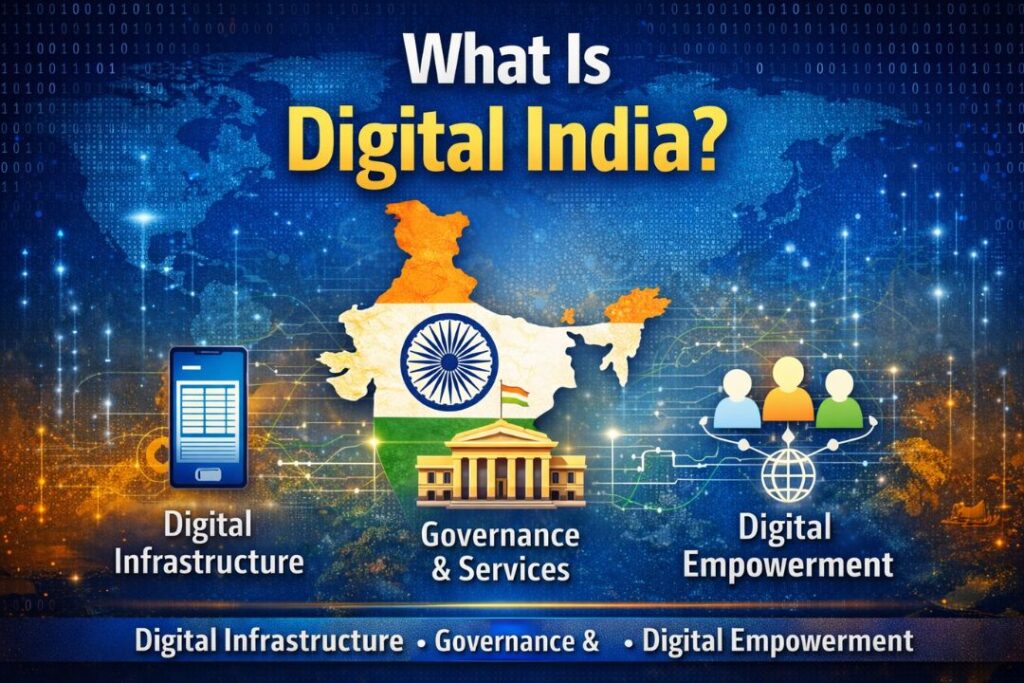
Digital India is a flagship initiative launched in 2015 with the goal of transform India into a digitally empowered society and knowledge economy. It focuses on three main pillars:
- Digital Infrastructure as a Utility
- Administration and services on demand
- Digital Empowerment
Through these pillars, the government aimed to create a strong digital spine that would enable economic expansion. The Digital India Economic Impact started becoming visible as internet penetration increased and digital services expanded rapidly across the country.
Expanding Digital Infrastructure
Digital infrastructure is the foundation of the Digital India economic impact. Without connectivity and digital access, economic transformation would not be feasible.
broadband and rural connectivity
Projects like BharatNet has expanded broadband access in rural areas. Affordable mobile data has made India one of the largest Internet-consuming nations in the world.
Key outcomes include:
Increase in online business participation
Growth of rural e-commerce
Improved digital literacy
Access to online education and health care
As connectivity spreads, the Digital India Economic Impact becomes stronger, allowing smaller towns and villages to participate in the formal economy.
Digital Payments Revolution
One of the most visible examples of the Digital India Economic Effect is the rapid growth of digital payments. India’s Unified Payments Interface (UPI) has revolutionized transactions by making payments immediate, secure, and low-cost.
Benefits of Digital Payments
- Reduced cash dependency
- Enhanced financial transparency
- Better tax compliance
- Lower transaction costs
- Inclusion of small traders in the formal economy
The fintech boom has reinforced the Digital India Economic Impact, contributing significantly to economic formalization and transparency.
Impact on GDP Growth
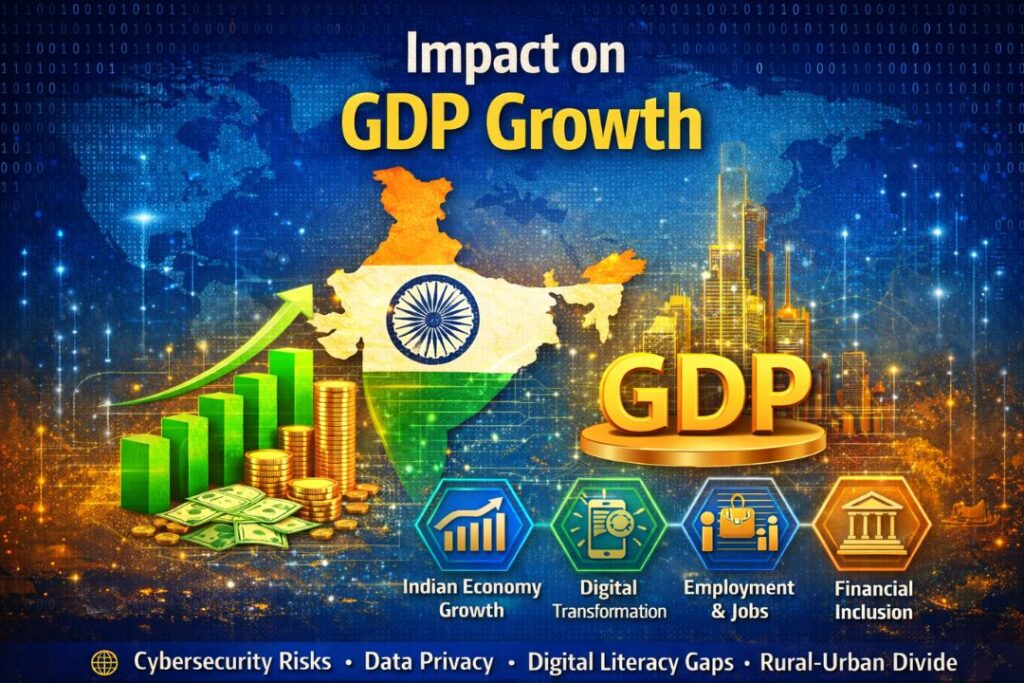
Digital transformation improves efficiency, decreases operational costs, and increases productivity. These factors together contribute to GDP growth.
The Digital India Economic Effect supports GDP in multiple ways:
- Growth of e-Commerce platforms
- Expansion of IT exports
- Increase in demand for digital services
- Increase in technology-driven entrepreneurship
Digital platforms allow businesses to scale faster. SMEs can now sell nationwide via online marketplaces. This scaling effect directly amplify the Digital India Economic Impact.
Employment generation and the startup ecosystem
India is now one of the biggest startup ecosystems in the world. Thousands of startups have emerged in fintech, edtech, healthcaretech, SaaS, and AI.
The Digital India Economic Effect has led to:
- Creation of highly skilled tech jobs
- Increase of freelance and gig economy work
- Increase in digital marketing and IT services
- Remote work opportunities
Digital entrepreneurship has reduced reliance on traditional jobs and created new economic pathways. As startups expand globally, the Digital India Economic Impact strengthens India’s position in the global digital economy.
Financial inclusion through technology
Financial inclusion is a major component of the Digital India economic impact. Through initiatives like Jan Dhan Yojana, Aadhar, and mobile banking, millions of citizens have gained access to banking services.
Key Achievements
- Direct Benefit Transfers(DBT)
- Mobile-based banking services
- Digital loan approvals
- Microfinance via fintech platforms
This inclusion increases consumption power, improves saving rates, and strengthens overall economic activity, enhancing the Digital India Economic Impact nationwide.
Growth of e-commerce and MSMEs
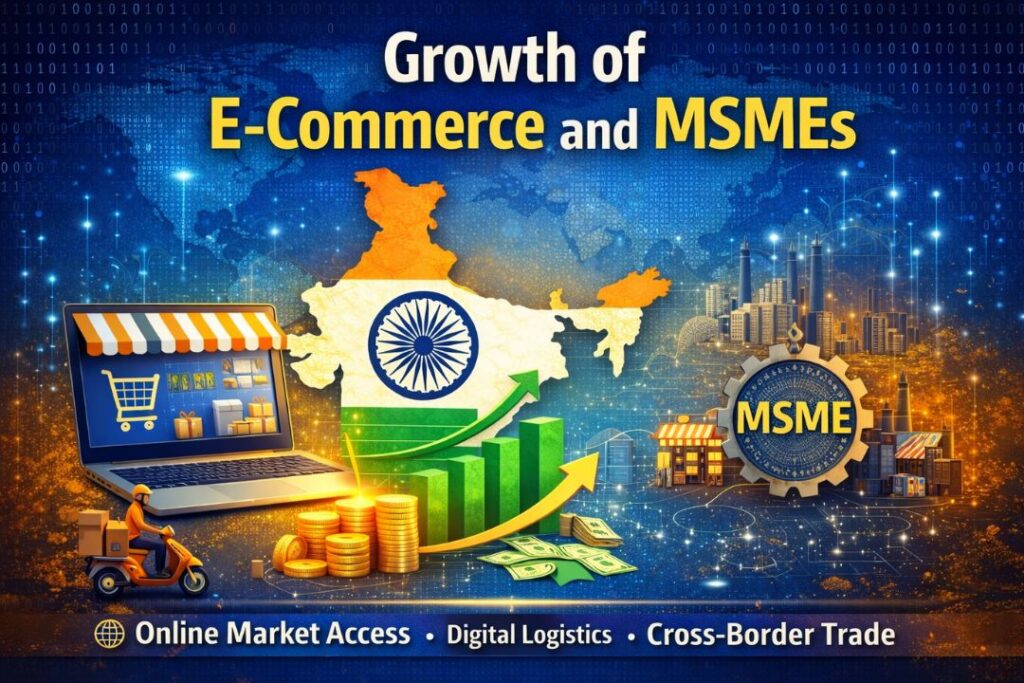
Small and medium enterprises (MSMEs) form the backbone of India’s economy. Digital marketplaces have allowed MSMEs to expand beyond local markets.
The Digital India economic impact in this sector includes:
- Online product visibility
- Lower marketing costs
- Cross-border trading opportunities
- Access to digital logistics
Digital tools empower smaller businesses to compete with larger corporations, thereby strengthening economic diversity and resilience.
government efficiency and transparency
E-governance platforms have simplified administrative processes. Online tax filing, digital land records, and government portals have decreased corruption and increased efficiency.
The Digital India economic impact in governance includes:
- Faster service delivery
- Reduced paperwork
- Improved accountability
- Transparent subsidies distribution
Digital governance reduces leakages and improves public resource utilization, positively impacting economic management.
education and skill development
Online learning platforms and digital classrooms have extended access to education. Skill development programs centered on coding, AI, and digital marketing are preparing the workforce for future industries.
The Digital India economic impact in education ensures:
- Better employability
- Higher productivity
- Digital skills readiness
- Global job opportunities
A digital skilled workforce strengthens economic competitiveness.
International Investment and Global Positioning
Global investors are increasingly investing in Indian technology startups and digital infrastructure. India is seen as a fast-growing digital economy with huge consumer potential.
The Digital India economic impact attracts foreign direct investment (FDI) because:
- Large digital consumer base
- Rapid fintech innovation
- Expanding SaaS industry
- Government Support for Startups
This influx of capital accelerates economic expansion and innovation.
Digital Transformation Challenges
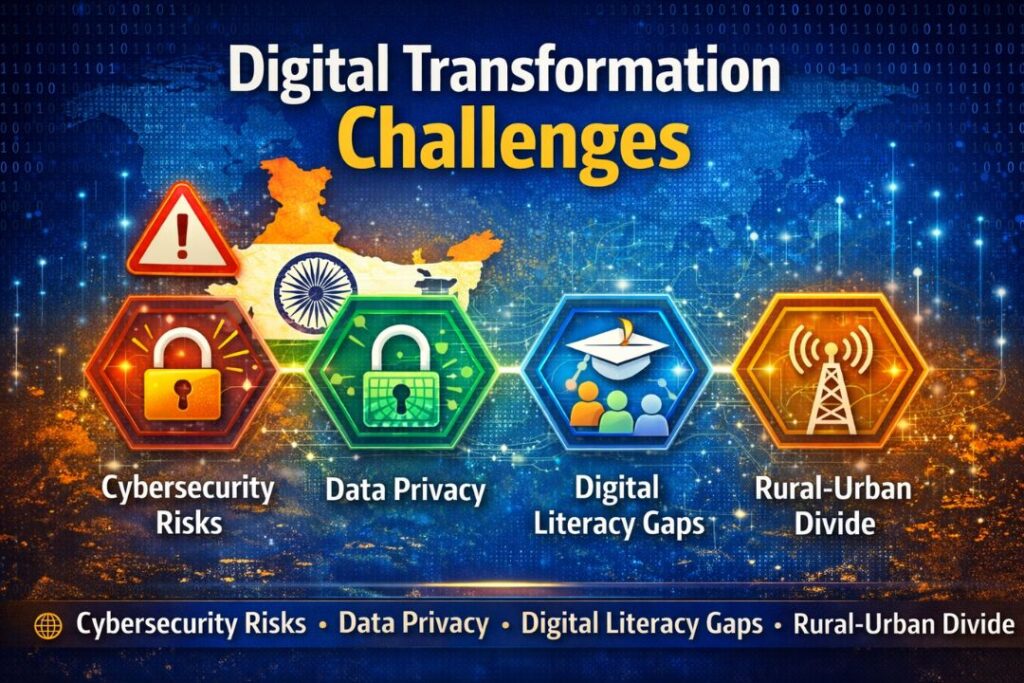
While the Digital India Economic Impact has been broadly positive, challenges remain:
- Cybersecurity risks
- Data privacy concerns
- Digital literacy gaps
- Rural-urban divide
Addressing these challenges is essential to maintaining long-term digital growth.
Role of artificial intelligence and emerging technologies
AI, blockchain, cloud computing, and IoT are shaping the next stage of the Digital India Economic Impact.
Future developments might include:
- Smart cities
- Automated industries
- AI-driven agriculture
- Digital healthcare expansion
These technologies will further integrate digital systems into India’s economical framework.
Impact on Rural Economy
Digital platforms have empowered farmers with market price data, climate updates, and online marketplaces. Rural entrepreneurs now can sell products nationwide.
The Digital India Economic Effect in rural areas leads to:
- Increased agricultural income
- Better price discovery
- Access to government schemes
- Rural startup growth
This balanced growth reduces migration pressure on urban areas.
Digital India and Tax Revenue Increase
As transactions move online, financial monitoring improves. This enhances compliance and expands the tax base.
The Digital India economic impact has improved tax collection efficiency, strengthening public finances and enabling higher infrastructure spending.
Future Outlook:2026 and Beyond
By 2026, India’s digital economy is expected to contribute a substantial share of GDP. The next phase of the Digital India Economic Impact will concentrate on:
- 5G expansion
- AI adoption
- Cross-border digital trade
- Digital currency integration
With continuing innovation, India may emerge as one of the world’s leading digital economies.
Conclusion
The transformation driven by technology is no longer restricted to urban elites. It has reached villages, smaller businesses, and everyday consumers. The Digital India economic impact has reshaped India’s economic structure by promoting inclusion, innovation, and efficiency.
From digital payments to startup growth, from financial inclusion to global investment, the Digital India economic impact is creating a resilient and future-ready economy.
As India continues investing in infrastructure, cybersecurity, and skill development, the longer-term Digital India Economic Impact will likely position the country as a global digital powerhouse.
The journey is underway, but the foundation is strong. The Digital India Economic Impact is not just a technological shift it is a structural economic transformation shaping India’s future prosperity.
Frequently Asked Questions (FAQs)
1.What is Digital India Economic Impact?
The Digital India Economic Impact refers to how digital transformation initiatives in India have impacted economic growth, employment, financial inclusion, productivity, and overall GDP expansion. It includes the impacts of digital payments, e-governance, startup growth, and technology-driven innovation.
2.How has Digital India improved the Indian economy?
The Digital India Economic Impact has improved the economy by increasing transparency, reducing cash reliance, boosting startup ecosystems, expanding internet access, and promoting digital financial inclusion. These factors together contribute to GDP growth and job creation.
3.How does digital payments contribute to economic growth?
Digital payments reduce transactions costs, increase tax compliance, and formalize the economy. This strengthens the Digital India Economic Impact by improving financial transparency and encouraging quicker business operations.
4.Has Digital India created job opportunities?
Yes. The Digital India Economic Impact has led to growth in IT services, fintech, digital marketing, data analytics, cybersecurity, and startup entrepreneurship, creating millions of direct and indirectly jobs.
5.What role does UPI play in Digital India Economic Impact?
UPI has revolutionized digital transactions in India by making payments immediate and low-cost. This has significantly reinforced the Digital India Economic Impact by increasing financial inclusion and improving economic efficiency.
6.How does Digital India support smaller businesses?
Via e-commerce platforms, digital marketing tools, and online payment systems, the Digital India Economic Impact has helped MSMEs expand beyond local markets and compete at national and global levels.
7.What are the challenges of Digital India?
While the Digital India economic impact has been positive, challenges include cybersecurity risks, data privacy concerns, digital literacy gaps, and rural-urban connectivity differences.
8.What is the future of Digital India Economic Impact?
The future of the Digital India economic impact includes 5G expansion, AI adoption, smart cities, digital currency integration, and increased global digital trade participation.
Disclaimer
The information provided in this article on Digital India Economic Effect is for educational and informational purposes only. Whereas every effort has been made to ensure accuracy, the content should not be considered financial, investment, legal, or professional advice.
Economic data, growth predictions, and digital transformation trends mentioned in this article are subject to change based on government policies, global economic conditions, and technological developments. Readers are advised to conduct their own research or consult a certified financial advisor before making any investment or business decisions.
The author and publisher are not liable for any financial losses, business decisions, or actions taken based on the information presented in this article.
